

Your skin has been described as needing a detox, a cleanse, a reset and sometimes even a complete overhaul. But does your skin really need to “flush out toxins” — and can a detox skincare routine actually do that?
The short answer is: not in the way many skincare trends suggest.
Your skin is an incredible protective barrier, constantly interacting with the outside world. It helps protect you from environmental irritants, prevents excessive water loss and plays an important role in regulating your body. But it isn’t a storage cupboard for toxins waiting to be scrubbed away with a charcoal mask.
That doesn’t mean the idea of a skin detox is completely useless, though.
If your complexion feels congested, irritated, unusually dry, sensitive or simply overwhelmed by a complicated skincare routine, taking a step back can be surprisingly helpful.
Think less “detox your skin” and more “give your skin less to deal with.”
In this post, you’ll discover:
- What a skin detox actually means
- Whether your skin really stores and releases toxins
- What cleansing can — and can’t — do
- How pollution can affect your skin
- Why too much exfoliation can backfire
- Whether you should take a break from active skincare ingredients
- How sleep, stress, hydration and nutrition fit into skin health
- What to remove from your routine during a skin reset
- What to keep
- A simple 3–7 day skin reset – plus FREE printable – you can try
- When less skincare really can be more
What does “skin detox” actually mean?

“Skin detox” sounds wonderfully straightforward. Remove the bad stuff, flush everything out and reveal fresh, healthy skin underneath.
Unfortunately, biology isn’t quite that simple.
There isn’t strong evidence that any particular cleanser, face mask, supplement, juice, or skincare product can “draw toxins” out of your skin.
Your body already has sophisticated systems to process and eliminate substances it doesn’t need. Your liver and kidneys play major roles in this process, while the skin’s primary job is to act as a protective barrier rather than function as a detox organ. Claims surrounding detoxes and cleanses generally aren’t supported by strong evidence.
So why does your skin sometimes look better after a “detox”?
Because simplifying your routine can be beneficial.
If you’ve been layering acids, retinoids, scrubs, masks, serums, and fragranced products onto your skin, a few days of doing less may give irritated skin a chance to settle.
That’s where the idea of a skin detox becomes genuinely useful.
A skin detox is better thought of as a skin reset
Rather than trying to remove mysterious “toxins”, a sensible skin reset focuses on:
reducing unnecessary irritation + protecting the skin barrier + returning to the basics.
It’s less glamorous than a £50 detox mask. But your skin may appreciate it considerably more.
Does your skin actually store toxins?
This is one of the biggest misconceptions surrounding skin detoxes.
Your skin does come into contact with a huge number of substances every day. Pollution, smoke, cosmetics, fragrances, dust, UV radiation and other environmental factors can all interact with the skin.
But that doesn’t mean these substances simply accumulate inside your skin until you “detox” them.
The outer layer of your skin — including the stratum corneum — forms a protective barrier between your body and the outside environment. It helps limit the penetration of potentially harmful substances while also reducing water loss.
Sweating can help regulate body temperature, and sweat contains various substances, but this shouldn’t be confused with the idea that a sweaty workout or sauna is flushing accumulated toxins out through your skin.
You don’t need to sweat out your skincare mistakes.
If your skin is unhappy, the more useful question is:
What might be irritating it — and what can I simplify?
So, what can cleansing actually do?
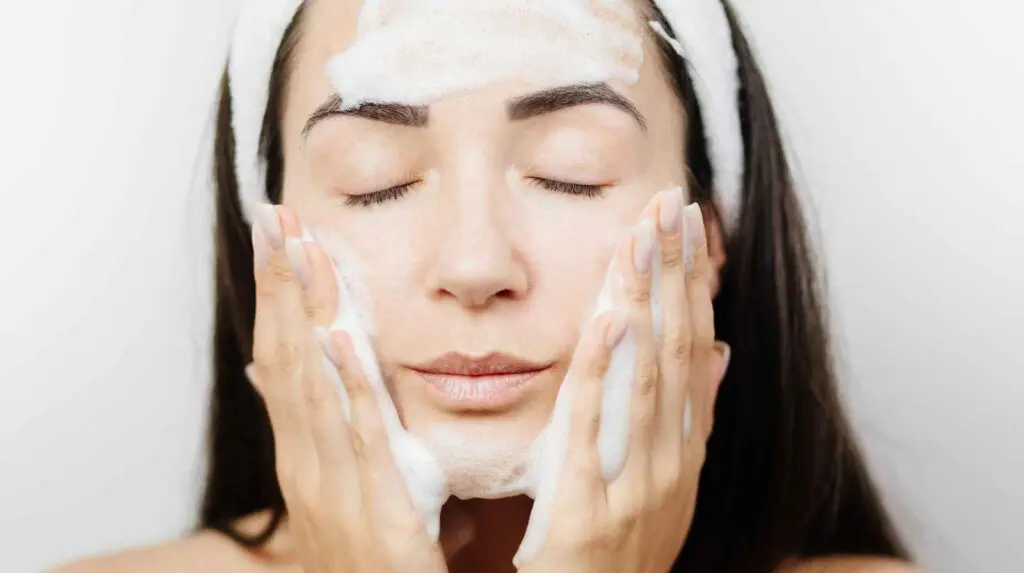
Cleansing has a genuine purpose.
A suitable cleanser can remove things that accumulate on the skin’s surface, including:
- Dirt and debris
- Excess oil
- Makeup
- Sunscreen
- Some pollutants and environmental particles
Dermatologists recommend gentle cleansing and lukewarm, not hot, water, especially when skin is dry or sensitive.
But cleansing stops being helpful at some point. Washing your face repeatedly or using harsh cleansers to achieve that ultra-clean, squeaky feeling can leave your skin dry and irritated.
And “squeaky clean” isn’t necessarily a sign of healthy skin. In fact, if your face feels tight immediately after cleansing, that’s worth paying attention to.
Your cleanser doesn’t need to make your skin feel stripped
A good skin reset is not about finding the strongest cleanser you can tolerate. It’s about finding one that removes what needs removing without making your skin work harder to recover afterwards.
What about pollution? Does your skin need a detox from that?
This is where things get more interesting.
Your skin is exposed to the environment every day, including air pollution and other external stressors. Research into the skin “exposome” shows that environmental factors can influence several aspects of skin function, including the barrier, inflammation, pigmentation and sensitivity.
That doesn’t mean you need a special pollution-detox serum. It does mean that sensible daily skincare matters.
A practical approach is surprisingly simple:
Cleanse → moisturise → protect your skin from UV exposure.
And if you’ve spent the day in a polluted urban environment, gently cleansing before bed can help remove accumulated dirt, oil and environmental particles. You don’t need to attack your face with five cleansing products afterwards.
Could you actually be overdoing your skincare?
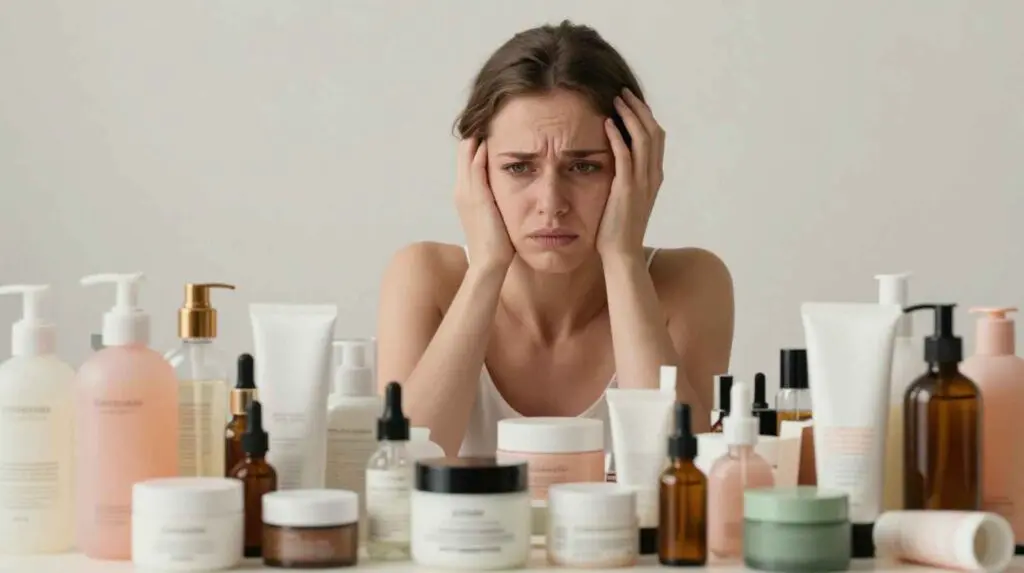
This is perhaps the most useful question to ask before starting a skin detox.
Because sometimes the problem isn’t that your skin isn’t getting enough.
It’s that it’s getting too much.
Modern skincare gives us an extraordinary number of options. Retinol. Vitamin C. AHAs. BHAs. Enzymes. Peptides. Toners. Essences. Masks. Exfoliating pads. Scrubs.
Individually, many of these products can have a useful place in a skincare routine. The problem can arise when you use several potentially irritating products together—or introduce too many new products at once.
Dermatologists warn that over-exfoliation can cause redness and irritation, and combining exfoliation with products such as retinol or benzoyl peroxide can increase dryness and irritation.
Signs your skincare routine may be doing too much
Your skin may be asking for a break if you’re experiencing:
- Persistent tightness
- Dryness or flaking
- Burning or stinging
- Increased sensitivity
- Redness
- A rough or uncomfortable texture
- Skin that suddenly reacts to products it previously tolerated
- More irritation after exfoliating
- A cycle of adding more products because your skin seems to be getting worse
These symptoms can have many causes, so don’t automatically assume a damaged skin barrier. But they are a good reason to pause and reconsider your routine.
Does your skin need a break from active ingredients?
Potentially – particularly if your skin is irritated.
If you’re using several active ingredients, simplifying your routine for a short period can make it easier to identify what your skin actually tolerates.
During a skin reset, you could temporarily pause:
- Physical scrubs
- Exfoliating acids
- Exfoliating pads
- Strong peeling products
- Clay masks if they leave your skin feeling dry
- New products you’ve recently introduced
- Multiple overlapping “active” serums
- Products that consistently sting or irritate your skin
This doesn’t mean active ingredients are bad. Quite the opposite: ingredients such as retinoids and chemical exfoliants can have legitimate dermatological uses. The key is using them appropriately for your skin and not assuming that more = better.
And if you use a prescribed treatment for a skin condition, don’t stop it simply because you’re doing a “detox”. Speak to your healthcare professional instead.
What should you keep during a skin detox?

This is where I’d challenge the usual detox mentality.
You don’t need to replace a ten-step routine with nothing.
Your skin still needs basic care.
1. A gentle cleanser
Use a cleanser that removes what you need it to without leaving your skin feeling stripped.
If your skin is particularly dry or sensitive, you may find that cleansing once in the evening is sufficient, while a splash of lukewarm water in the morning works for you. Your skin is individual, so there isn’t one perfect routine for everyone.
2. A moisturiser
Moisturiser isn’t an optional extra when you’re trying to “reset” your skin. It can help support the skin barrier and reduce dryness.
Look for a formula that your skin tolerates rather than chasing the newest trending ingredient. Ingredients commonly used in moisturisers include ceramides, glycerin and other hydrating or barrier-supportive ingredients.
3. SPF
A skin reset is not an excuse to skip sunscreen.
UV exposure is one of the most important environmental factors affecting skin health and premature skin ageing. Daily sun protection should remain a basic part of your skincare routine.
4. Products your skin already knows it likes
This is not the week to test six new products.
If your existing cleanser and moisturiser work well for you, there’s something reassuring about sticking with what you know.
The 3–7 Day Skin Reset
Ready to give your skincare routine a little breathing space?
Here’s a simple approach.
You don’t have to follow it perfectly. Think of it as a framework, not another set of skincare rules.
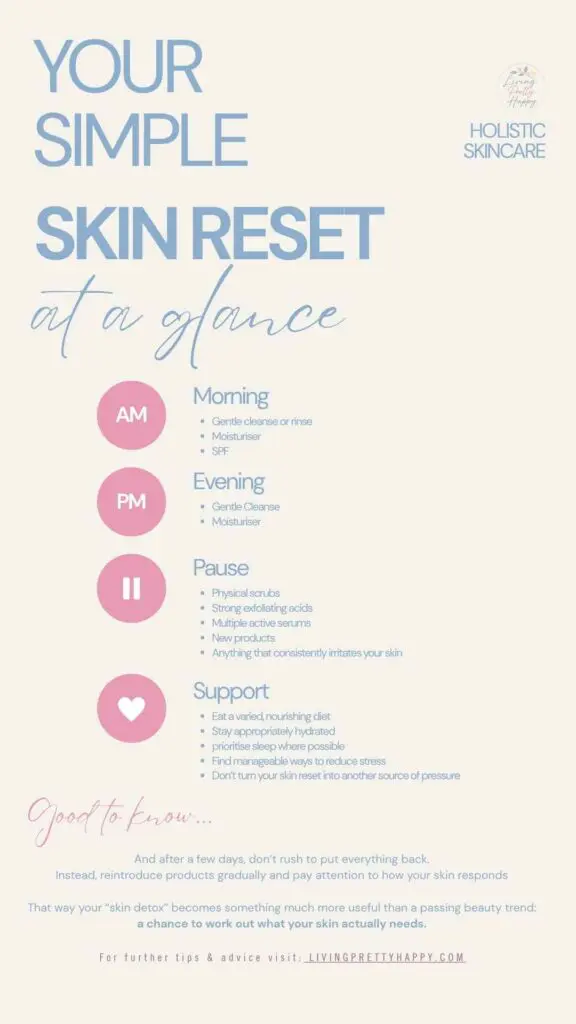
Morning
Step 1: Cleanse gently — or simply rinse
If your skin doesn’t need a full cleanse in the morning, lukewarm water may be enough for some people.
If you wake up oily or prefer to cleanse, use your gentle cleanser.
Step 2: Moisturise
Apply a simple moisturiser that you know your skin tolerates.
Step 3: SPF
Finish with broad-spectrum sun protection appropriate for your skin and circumstances.
Evening
Step 1: Remove makeup and sunscreen
Cleanse gently rather than scrubbing.
Step 2: Moisturise
Keep this step simple.
Step 3: Stop there
For three to seven days, resist the urge to add another serum just because your face feels like it should be “doing something”.
Sometimes doing less is the experiment.
What to avoid during your skin reset
For a few days, consider putting aside:
– Physical scrubs
Especially anything that leaves your skin feeling raw or polished.
– Strong exfoliating acids
Give your skin a chance to settle if you’re experiencing irritation.
– Multiple active serums
You don’t need to use every ingredient in your bathroom cabinet at the same time.
– New skincare products
It’s hard to tell what is helping when you’re constantly introducing something new.
– DIY kitchen skincare
Lemon juice, baking soda and other viral “natural” skincare hacks aren’t automatically safer because they’re natural.
– Aggressive cleansing
Clean skin doesn’t need to feel stripped.
– The pressure to fix everything
Your skin isn’t a project you need to finish by Friday.
What about hydration?
Drinking enough fluid is important for overall health, but drinking enormous quantities of water won’t magically “flush toxins through your skin”. This is another area where the detox industry can turn a sensible habit into an exaggerated promise.
Stay appropriately hydrated, eat a varied diet and don’t fall for the idea that you need lemon water, detox drinks or a juice cleanse to achieve clearer skin. Your body is already doing a considerable amount of work behind the scenes.
Can what you eat affect your skin?

Nutrition and skin health are connected, but this doesn’t mean there’s a magical “skin detox diet”.
A balanced diet containing a variety of fruits and vegetables, whole grains, legumes, healthy fats and adequate protein provides the nutrients your body needs for normal health.
The important distinction is between supporting your overall health and promising that a particular food will “cleanse” your skin.
Be especially cautious of restrictive detox diets. You don’t need to starve, juice or eliminate entire food groups to give your skin a reset.
In fact, your skin is part of your body. Looking after it means looking after the person attached to it, too.
Don’t overlook sleep and stress
This is where a genuinely holistic approach to skincare becomes much more interesting.
Your skin doesn’t exist separately from the rest of you. Research suggests that psychological stress can affect epidermal barrier function, including hydration and water loss.
Sleep matters too. Research has linked poor sleep quality with impaired skin barrier function and slower barrier recovery after disruption.
That doesn’t mean you should feel guilty if you have a terrible night’s sleep and wake up with tired-looking skin. And it certainly doesn’t mean meditation will magically cure acne.
It simply means that skin health is influenced by more than the products sitting on your bathroom shelf.
So if you’re creating a “skin detox”, don’t make it another thing to stress about.
A better version might include:
- Going to bed a little earlier
- Getting some daylight during the day
- Eating regular, nourishing meals
- Staying hydrated
- Taking a break from unnecessary skincare
- Finding small ways to reduce stress
- Giving yourself permission to stop chasing perfect skin
That’s a much more holistic reset.
When less skincare really is more
We’ve become used to the idea that good skincare requires a carefully choreographed collection of products.
But healthy skin isn’t necessarily the skin with the longest routine.
Sometimes your skin needs an active ingredient.
Sometimes it needs treatment from a dermatologist.
Sometimes it needs more moisture.
And sometimes it simply needs you to stop throwing things at it.
The American Academy of Dermatology specifically recommends considering the products you’re already using before exfoliating because several products can increase sensitivity or peeling. It also recommends moisturising after exfoliation and avoiding over-exfoliation.
That’s a useful reminder that skincare isn’t about accumulating steps. It’s about understanding what your skin needs.
What if your skin still isn’t happy after a skin reset?
A skin reset can be useful if you’ve simply overcomplicated your routine. But it isn’t a treatment for every skin condition.
Persistent acne, rosacea, eczema, dermatitis, unexplained rashes, painful breakouts or significant changes in your skin deserve proper assessment rather than another DIY skincare experiment.
And if your skin is persistently burning, cracking, bleeding, very itchy or painful, speak to a healthcare professional or dermatologist.
Sometimes the most holistic thing you can do for your skin is get the right diagnosis rather than keep experimenting.
So, does your skin actually need a detox?
Probably not in the way the beauty industry would have you believe.
You don’t need to “flush toxins” from your face with a charcoal mask. You don’t need a juice cleanse. You don’t need to sweat everything out in a sauna. And you don’t need to buy a £60 product simply because the word detox is printed on the packaging.
But your skincare routine might benefit from a reset.
If your skin feels irritated, overloaded or unpredictable, temporarily stripping things back to the basics can help you identify potential irritants and give your skin some breathing room.
Cleanse gently. Moisturise. Protect your skin from the sun. Pause unnecessary actives if you’re irritated. Eat well. Sleep when you can. Manage stress where possible. And give your skin time.
That’s not a detox. It’s simply good skincare.
The bigger lesson?
Your skin doesn’t need you to constantly fix it. Sometimes, it needs you to listen to it.
Download your FREE Skin Reset Now:
A final thought
There is something wonderfully liberating about realising that healthier skin doesn’t necessarily require more.
More products.
More exfoliation.
More treatments.
More complicated routines.
More things to buy.
Sometimes the most effective change is simply removing what isn’t helping.
So if your skincare routine has become a little overwhelming lately, perhaps you don’t need a detox at all.
Maybe your skin just needs a little less.
Have you tried a skin detox before? How did you get on? Whether you’re new or seasoned to skin detoxes, I hope you’ll find some helpful information here. Do you have any top tips of your own to share? Whatever you’d like to say or ask, please do. I’m happy to help, and I always love to hear from you.
Sources and further reading:
- American Academy of Dermatology — How to safely exfoliate at home — guidance on exfoliation, irritation and protecting the skin barrier.
- American Academy of Dermatology — How to pick the right moisturizer for your skin — practical guidance on moisturising and avoiding excessive stripping of dry skin.
- American Academy of Dermatology — Do facial masks work, and should I add one to my skin care routine? — information about barrier-supportive ingredients and potential irritation from masks.
- Cleveland Clinic — Detox or Cleanse: What To Know Before You Start — evidence surrounding detox and cleanse claims.
- Cleveland Clinic — A Guide on How to Wash Your Face — guidance on cleansing, pollutants and gentle washing.
- Maarouf M, et al. The impact of stress on epidermal barrier function: an evidence-based review. British Journal of Dermatology. 2019.
- Oyetakin-White P, et al. Does poor sleep quality affect skin ageing? British Journal of Dermatology. 2015.
- Lyu F, et al. Stress and its impairment of skin barrier function. International Journal of Dermatology. 2023.
This article is intended for general information and isn’t a substitute for individual medical or dermatological advice.