

Wear sunscreen. It’s such a blanket statement, isn’t it? On first appearances, it sounds quite straightforward but if we were required to drill down into the specifics, how many of us really know the ins and outs when it comes to keeping ourselves sun-safe?
With around 86% of melanoma cases in the UK reported as preventable1 it’s crucial that we take the time to learn what it takes to truly protect ourselves.
Source1: Cancer Research UK
Here I’ve pulled together a list of commonly asked questions (well some commonly asked & some I just think you’ll be interested in knowing!) relating to sunscreen. Now, this is the point where I point out I’m not a medical professional. I’ve researched the answers and have provided, where relevant, the source to each. But please be sure to do further research or seek medical advice if you have any concerns. This article is more of a reference guide than a medical journal.
Staying Sun Savvy: A Guide to Sunscreen & SPF
What is SPF?
Sunscreens are commonly rated and labelled with an SPF. SPF stands for Sun Protection Factor. It measures the amount of UVB protection a sun protection product will give you. UVA protection is rated in a different way, which I’ll cover in a bit.
What do the different ‘factors’ mean?
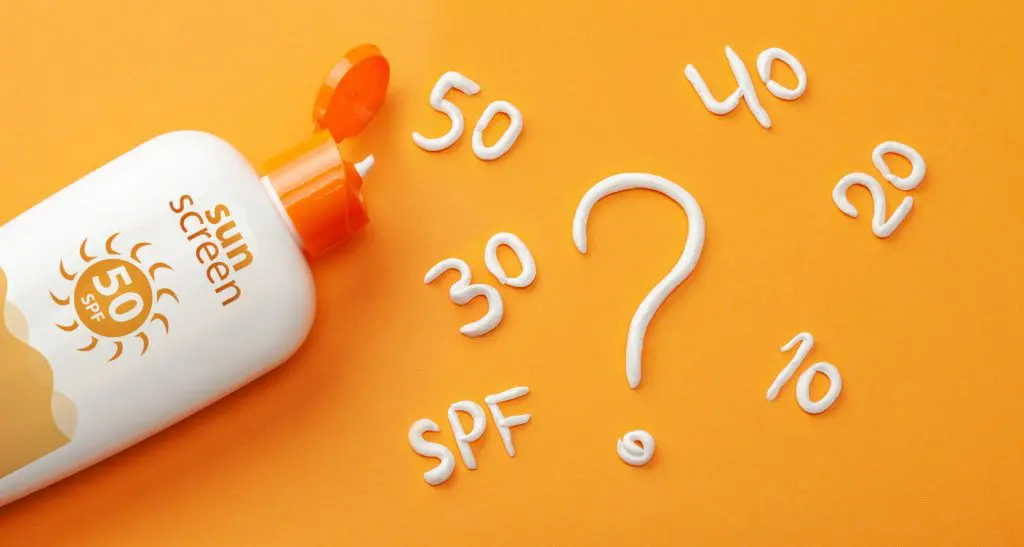
The numbered factor e.g. SPF15, SPF30 etc. indicates how long the sun’s UVB radiation would take to redden your skin if you apply the sunscreen (exactly as directed) compared to the same period of time in the sun without it. For example, if you apply an SPF30, it will take you 30 times longer to burn than if you used no sunscreen at all.2
Source2: Skincancer.org
Looking at it another way, sunscreen acts as a filter, partially blocking the suns rays from getting through. An SPF15 still allows about 7% of UVB rays to hit your skin, whereas SPF30 allows about 3% and SPF50 just 2%3. That may seem like a small difference until you realise that the SPF 30 is allowing 50 per cent more UV radiation onto your skin.4
Source: Nivea.com3 and Skincancer.org4
Factors range from SPF2 to SPF50+. The NHS recommend an SPF of at least 30.
Good to know: Whilst a higher factor can provide higher protection, you must ensure you don’t become complacent. For example, someone who has applied an SPF50 may feel they can go longer between applications, skip shade or wear less cover than someone who has applied SPF15. In actuality, you need to reapply just as regularly and take all the same precautions.
What factor should I use?
Your skin tone is a big factor in selecting which SPF you should use. The fairer your skin the higher the SPF required. The assumption is that fair skin contains less melanin and therefore less natural protection from the sun’s UV rays and is more likely to burn. Which is why dermatologists often relate your required SPF factor to your skin phototype.
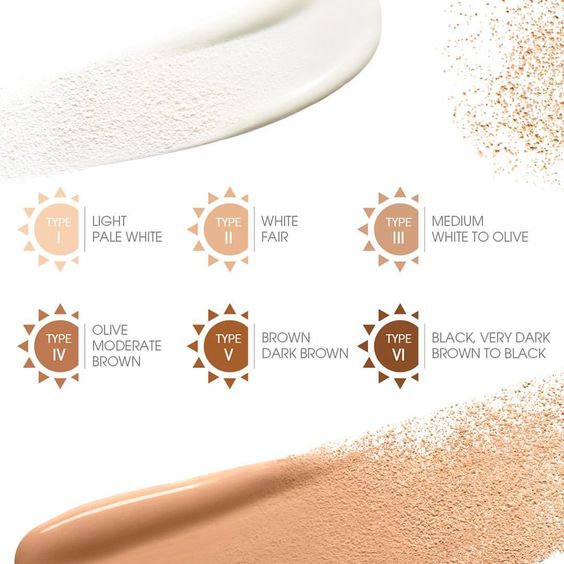
If you’re type 1-2 you should wear a minimum of SPF30 and types 3-6 a minimum of SPF15.5 But I do want to point out again, NHS guidance recommends an SPF of at least 30 regardless of skin tone.
Source5: Healthline
Which sunscreen should I choose?
There are so many sunscreens on the market it’s difficult to decide which to choose. The Skin Cancer Foundation believes ‘the best sunscreen is the one you are most likely to use’6. Take some time to work out which suits your needs the most – Is it water-resistant? How do you prefer to apply it? Fragranced or un-fragranced? As long as the product is reputable and the right level of SPF for your individual needs, it will be the right one for you. However, regardless of the brand you plump for, your sunscreen should be broad spectrum.
Source6: Skincancer.org
What do you mean by ‘broad spectrum’ sunscreen?
Sunscreen that protects the skin from damage from both UVB (burning) and UVA (ageing) rays. SPF addresses the UVB protection but a star-rating determines the UVA protection. It is highly recommended that any sunscreen you choose is broad spectrum.
Did you know? The NHS advise use of sunscreens with a minimum 4-star UVA protection rating.
How do I use Sunscreen?
Exactly as advised on the packaging. It’s really important you follow the manufacturers’ instructions carefully & precisely in order to have greater confidence your sunscreen is providing you the protection it promises. But unless you are specifically advised otherwise, the following usually applies when applying sunscreen:
- If you plan to be out in the sun long enough to risk burning, apply 30-minutes prior to going out and again just before you go out.
- It should be applied to all exposed skin
- Reapply every 2-hours
- Reapply straight after you have been in water (even if your sunscreen is water resistant), after towel drying and also if you’ve been sweating.
- You should apply 2-teaspoons of sunscreen if you’re covering just your head, neck and arms. This should be increased to 2-tablespoons if you’re covering your whole body
Source: NHS.UK
Do I need to wear sunscreen if I tan easily?
Yes, you do! Skin that tans is no more protected from the sun’s harmful effects than skin that doesn’t. Sorry to break it to you, but there is no such thing as a safe tan.
RELATED: 5 Steps to a (Well Kept Secret) Self-Tan
Do I need to wear sunscreen if I’m black or have a darker skin colour?
Yes, again you do. Although dark skin is naturally more protective against harmful rays from the sun than fair skin, people of all skin types can burn without sunscreen. Health experts advise everyone, regardless of skin colour, to use sunscreen.7
Source7: Winchester Hospital

If I double-up my sunscreen does it make the factor higher?
No, unfortunately not. If you double-apply SPF15 you haven’t covered yourself in SPF30, you’re still only protected by a covering of SPF15. It’s also good to know that using a facial sunscreen of say SPF30 followed by a foundation with SPF15, doesn’t mean you’ve protected your face with SPF45 either – the maximum will be SPF30.
However, it never hurts to layer on the sunscreen as you’re much more likely to apply the right amount and less likely to miss a spot.8
Source8: Insider.com
Does sunscreen have an expiry date?
Yes. Some will have an actual expiry date on the product. Some display a little jar symbol with a number and an M (meaning months) representing how long you have to use it once opened. But if neither of these is apparent, the average shelf-life of sunscreen is 2 to 3 years.
Will wearing a sunscreen prevent me from tanning?
No, it won’t. You can still tan, although it may take longer.9 Even though you’re wearing sunscreen, on average around 3% of UVB rays are still getting through. I really don’t want to be a Lady Nancy Nags-a-Lot here, but I just want to point out it is seriously more important to protect yourself from harmful rays than it is to forsake the sunscreen for a faster tan.
Source9: Weldricks
RELATED: Here Comes the Sun – The Easy Way to Get Yourself Summer Ready
Should I only wear sunscreen when it’s sunny?
No, even when it’s cloudy you need to apply sunscreen. Damaging UV rays are still present on cooler and cloudier days.10 Obviously, you’re more likely to be covered-up in what you’re wearing and spend less time outdoors, but you should still apply a broad-spectrum sunscreen to your face daily.
Source10: Forbes
Can adults use kids’ sunscreen?
Yes! Kids’ sunscreens can be used by adults. They tend to contain mineral UV filters Zinc Oxide and Titanium dioxide rather than synthetic UV filters which make them less irritating on sensitive skin. However, they still provide protection for adults.
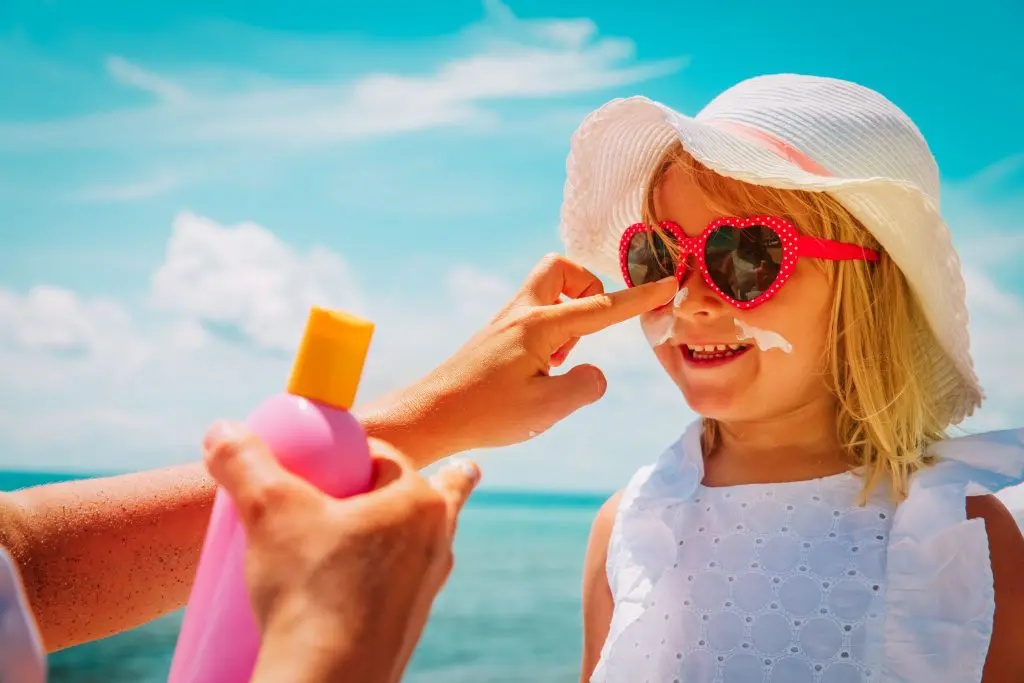
Does this mean kids can use adult sunscreen? Potentially. You really need to read the ingredients and avoid synthetic UV filters – which can be tricky when you’re overwhelmed by all the indecipherable names on an ingredients list! You have to keep in mind how much more sensitive kids’ skin is and make sure you’re selecting a high enough SPF.
Is the SPF in my makeup enough?
I personally want to say yes, but the answer is no. In order to get the amount of SPF claimed on the product, you will need to apply much more of it than you probably do.
If this leaves you questioning the point of SPF in makeup, I don’t blame you, but maybe view it as an added bonus when used in conjunction with a sunscreen. As I mentioned above, applying additional SPF in this manner may catch areas you might have missed. They just shouldn’t be used as a stand-alone sun protector.11
Source11: Womens Health
What about SPF in skincare products such as moisturisers?
These are more promising, although the dermatologist jury is still out. Some feel nothing is as good as an actual sunscreen whereas others suggest they do offer basic daily protection for brief sun exposure.
Source12: Yahoo
Is a broad spectrum sunscreen alone enough to protect me from sun damage?
Unfortunately, sunscreen alone is not enough. There are extra precautions to take to keep yourself sun-safe. You should spend time in the shade when the sun is strongest (typically between 11 am-3 pm) and cover-up with suitable clothing and sunglasses.
I have really sensitive skin or I believe I’m allergic to sunscreen – what are the alternatives?
Shop for a sunscreen that uses mineral UV filters such as Zinc Oxide and Titanium Dioxide (you know, like the ones you find in kids’ sunscreen). These formulations sit on top of the skin rather than sink into the skin like a sunscreen with a chemical UV filter would.13 Also, look for fragrance-free formulations. Remember to patch-test if you’re sensitive and seek support from a healthcare practitioner if none of the off-the-shelf products are working.
Source13: Womens Health
Does sunscreen block vitamin D?
As sunscreen blocks UVB light, in theory, you might expect it to lower vitamin D levels but this is generally dispelled.14 Three separate studies concluded that’s it’s use has no impact on vitamin D levels in most people.
Source: Harvard Medical School14 & Independent15
However, if you’re someone who is deficient in vitamin D then this is something you will need to discuss further with a healthcare practitioner.
You might also enjoy: How to Get the Most Out of Your Skincare Products
I hope you’ve found this guide to sunscreen & SPF helpful? Did you discover anything new? Were there any questions that weren’t covered? Ask away, I’ll find you the answer if I can! Whatever you’d like to say, please do leave a comment in the box below. I’m happy to help & I always love to hear from you!
ADVERTISEMENT:




This article highlights a major area of importance for health and well-being, Alex. Thank you. It’s easy to forget to apply sunscreen, but it’s so important for us, just as wearing a seat belt in the car is. Interesting facts about types of sunscreen, always worth buying a quality product. After all ‘we have only got one skin’. We need to look after it!
That’s so true, we have only got one skin & we certainly do need to look after it! Thanks for reading & sharing your thoughts x
So useful, got informed so much, thank you❤️
I’m so pleased to hear that Lusine, thank you for reading xx
I actually had no clue what the difference was between UVB and UVA protection, so I’m glad to understand the importance of this type of protection now. Also, I’m so glad that you pointed out that sunscreen in makeup is not enough protection because it can be misleading. So even though it is better than nothing, it is def still important to add another layer of protection!
I was honestly so disappointed to learn that it wasn’t enough as I’d spent so long believing it was helping me but like you said, something is better than nothing and yes, definitely important to add another layer of protection. Thanks for reading! xx