
Sponsored Guest Post: In Collaboration with Umi Tea Sets.
Modern life can bring a constant stream of work, responsibilities, notifications and information, making it difficult to find genuine moments of calm.
For tea lovers, preparing and drinking tea offers a simple way to create a pause in the day. Traditional Chinese Gongfu tea practice follows a gentle rhythm – from heating water and preparing the tea leaves to pouring and tasting -encouraging you to slow down and focus on each movement.
When you combine tea preparation with mindfulness, an everyday cup of tea can become a small opportunity to step away from distractions and reconnect with the present moment. You don’t need an elaborate ceremony or a dedicated tea room. A few intentional steps can transform tea preparation into a relaxing daily ritual.
In this guide, we’ll explore how to create a mindful tea ritual at home, from setting up a simple tea space and choosing your teaware to using traditional tea tools and enjoying each stage with greater awareness.
Setting Up a Simple Mindful Tea Space
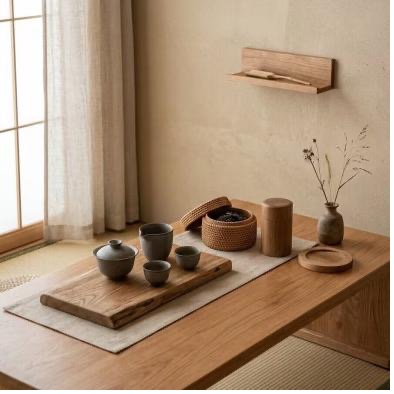
You don’t need a dedicated tea room to create a peaceful space for your tea ritual. A quiet corner, a small table by a window, or even a tray on your desk can work beautifully.
Choose somewhere with as few distractions as possible where you can sit comfortably and relax your shoulders. Natural light can add to the atmosphere, but it isn’t essential. What matters most is a practical space where you can focus on preparing and enjoying your tea.
Arrange your tea space step by step
1. Prepare a tea tray.
If you don’t have a tea tray, a tea mat can work just as well. It helps define the brewing area and catches small drops of water from rinsing cups or warming the pot. Choose something stable, practical and easy to clean.
2. Place the brewing vessel in the centre of the tray.
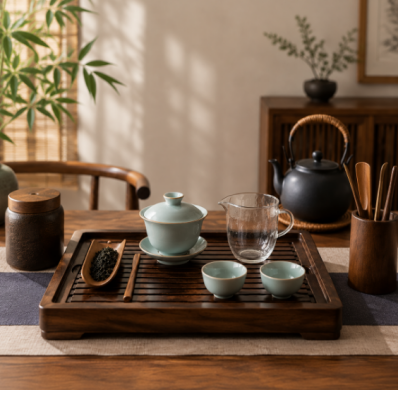
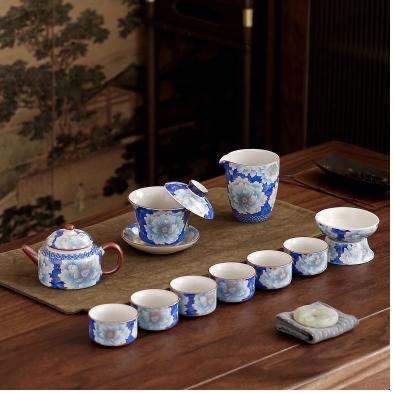
Traditional Gongfu tea commonly uses a small clay teapot or a gaiwan. Both can work well. A teapot offers a familiar, controlled pour, while a gaiwan allows you to observe the leaves as they open.
Choose the vessel you feel most comfortable using and place it at the centre as the main focus of your tea table.
3. Add one or two small tasting cups.
Gongfu tea is usually served in small cups, allowing you to appreciate the tea in a few considered sips. Place them close to the brewing vessel so they’re easy to reach.
If you’re using a fairness pitcher to distribute the tea evenly, place it beside the teapot or gaiwan.
4. Position the tea caddy and kettle to the sides.
Keep the tea caddy close enough to reach the leaves without interrupting the brewing process. Place the kettle slightly farther back on whichever side feels most comfortable.
Leave the front area open so your hands can move easily between the brewing vessel and cups.
Once your teaware is ready, it’s time to begin brewing.
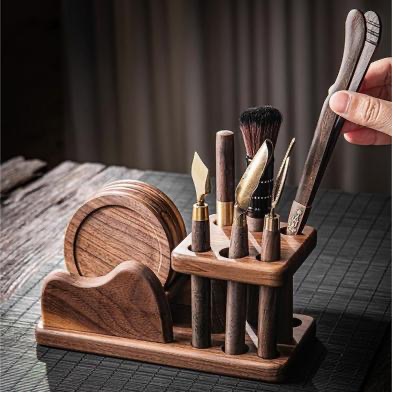
Traditional Gongfu tea preparation also uses a set of supporting utensils known as the Six Gentlemen of Tea (Liù Jūnzǐ).
What Is a Tea Utensil Set? The Six Gentlemen of Tea Explained
The Six Gentlemen of Tea (Chádào Liù Jūnzǐ) are a traditional collection of small utensils used in Chinese Gongfu tea preparation. Each tool has a specific purpose, from measuring and transferring tea leaves to handling hot cups and clearing the teapot.
The set typically includes the tea scoop (cha ze), tea spoon (cha chi), tea funnel (cha lou), tea tongs (cha jia), tea needle (cha zhen), and utensil holder (cha tong).
Together, these tools make the brewing process more organised and deliberate, allowing the tea maker to focus on each movement rather than rushing from one step to the next.
Their functions are closely connected to the different stages of brewing:
Tea Scoop (Cha Ze): Used to take dry tea leaves from the tea caddy and transfer them towards the brewing vessel. It also gives you an opportunity to observe the leaves before brewing.
Tea Spoon (Cha Chi): Used to guide tea leaves into the teapot or gaiwan and, when needed, help remove leaves after brewing.
Tea Funnel (Cha Lou): Placed over the opening of a narrow teapot to help guide dry tea leaves inside without spilling them onto the tea table.
Tea Tongs (Cha Jia): Used to handle small tea cups during warming, rinsing and serving. They can also be useful when cups are too hot to handle comfortably.
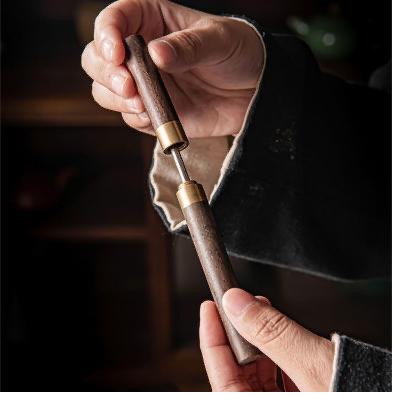
Tea Needle (Cha Zhen): Used to clear tea leaves from the filter or spout if they restrict the flow of water.
Utensil Holder (Cha Tong): Holds the other utensils together when they’re not in use, keeping the tea table organised and the tools ready for the next session.
The word Jūnzǐ carries a cultural meaning in Chinese tradition, suggesting qualities such as grace, restraint and humility. The name reflects the quiet role of these utensils: they support each step of tea preparation without taking attention away from the tea itself.
Together, they can make the process feel more orderly, deliberate and natural.
How to Use a Tea Utensil Set During Your Tea Ritual
1. Prepare and observe the tea leaves
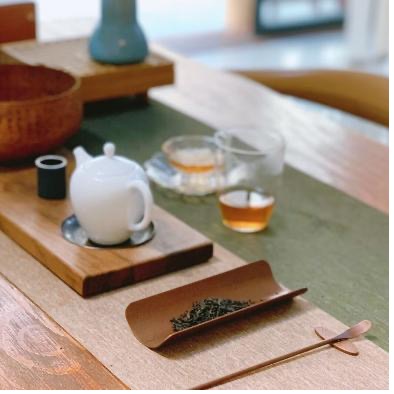
Use the tea scoop (cha ze) to take dry tea leaves from the tea caddy.
Before adding them to the brewing vessel, pause for a moment to observe their shape, colour and texture. Bring them closer and notice their natural fragrance.
This small pause is an easy way to begin your tea ritual with intention, rather than rushing to the next task.
2. Warm the teaware
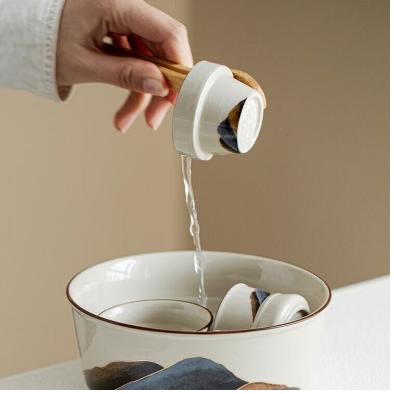
Pour hot water into the teapot or gaiwan to warm the vessel, then use the tea tongs to handle small cups when warming or rinsing them.
Warming the teaware helps reduce the temperature difference between the hot water and the vessel, while keeping the cups warm when the tea is served.
More importantly for a mindful tea ritual, this is another opportunity to slow down and pay attention to what you’re doing rather than treating the process as something to hurry through.
3. Transfer the tea leaves
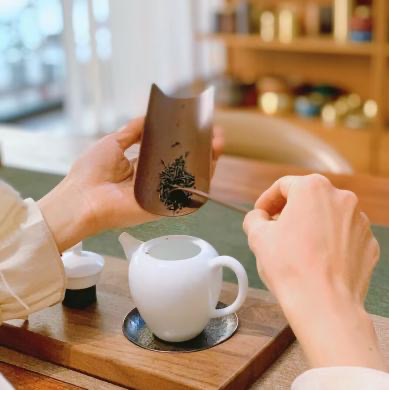
When using a small teapot with a narrow opening, place the tea funnel over the opening to help prevent the leaves from spilling.
Then use the tea spoon to gently guide the leaves from the tea scoop into the teapot.
A gaiwan usually has a wide enough opening that a funnel isn’t necessary, so the tools you use can depend on your brewing vessel and the type of tea you’re preparing.
4. Add water and brew
Slowly pour hot water into the teapot or gaiwan.
This is a natural point to bring your attention to your senses. Watch as the leaves absorb the water and gradually unfold. Notice the sound of the water, the rising aroma and the changing colour of the tea.
Let the tea steep according to the tea type and your preferred strength.
If tea leaves block the filter or spout and slow the flow, use the tea needle to gently clear the opening.
5. Pour, taste and pause
Once the tea is ready, pour it into the cups or a fairness pitcher before serving.
Hold the cup with both hands and notice its warmth. Take a small sip and pay attention to the temperature, aroma, texture and taste.
Rather than drinking while scrolling through your phone, checking emails or thinking about the next task, give yourself permission to simply experience the tea for a few moments.
When the session is finished, return the six utensils to their holder. Keeping them together makes the next tea session easier to prepare and helps keep your tea table neat and organised.

Choosing the Right Teaware and Materials
Once you understand how the tea tools work, the next step is choosing teaware that feels right for your daily ritual.
Material can affect not only the appearance of the tea table, but also how a vessel feels in your hands and how you interact with your tea.
For the main brewing vessel, Yixing clay, ceramic and stoneware are all well suited to Gongfu tea.
Unglazed Yixing clay is valued for its natural texture and the way its surface develops character with use. Ceramic and stoneware offer a more neutral brewing experience and work well with many types of tea.
When choosing a teapot, look for one that feels balanced in your hand, pours smoothly and has a lid that fits securely. A comfortable weight and easy handling are more important than choosing a vessel simply because it looks beautiful.
For teacups and serving vessels, ceramic and clay are comfortable choices because they have a pleasant weight and can help maintain the warmth of the tea.
Glass can be particularly useful for a fairness pitcher or serving vessel, as its transparency allows you to see the colour and clarity of each infusion. This can be an enjoyable part of watching how the tea changes from one brew to the next.
For the tea tray, material affects both stability and the overall feel of the tea table.
Bamboo is lightweight, warm to the touch and well suited to a simple home tea setup.
Stone provides a heavier, more stable surface and works well if you frequently rinse cups or teaware on the tray.
Ebony wood has a dense texture, smooth finish and deep natural colour, giving the tea table a more substantial and refined appearance.
Whatever material you choose, make sure the tray is stable, large enough for your basic setup and easy to clean.
Finally, consider the material of your tea utensil set.
Natural materials such as walnut wood, bamboo and brass can work particularly well in a traditional tea setting. Walnut has a dense grain and warm, substantial feel in the hand, while bamboo is lighter and has a natural texture. Brass gives smaller utensils a little more weight and can develop its own character over time.
For frequently handled tools, smooth edges, a comfortable grip, and sturdy construction matter more than excessive decoration.
The goal isn’t to collect every type of teaware or use the most expensive materials.
Instead, choose pieces that feel natural in your hands, work well with how you brew tea, and make the tea table somewhere you enjoy returning to.
When tools are practical and pleasant to use, they can quietly support the mindful rhythm of the ritual rather than becoming another distraction.
Making a Mindful Tea Ritual Part of Your Daily Routine
A mindful tea ritual doesn’t need a complicated ceremony or take up much of your day.
A well-arranged tea space, a few suitable tools and several minutes of focused brewing can create a welcome pause from the pressures and distractions of everyday life.
You might choose to make your tea ritual:
- In the morning, before reaching for your phone, as a gentle way to begin the day.
- During an afternoon break, as a transition between tasks.
- After work, to create a clearer boundary between work and home.
- In the evening, as part of a slower wind-down routine.
- Whenever you feel overwhelmed, simply as an invitation to pause and focus on the moment in front of you.
The ritual doesn’t have to look exactly the same every time, either.
Some days you may have time to carefully prepare Gongfu tea and focus on every step. On busier days, your mindful tea ritual might simply mean making your favourite cup, sitting somewhere quiet and taking a few uninterrupted minutes to enjoy it.
What matters is the intention behind the pause.
By slowing down, paying attention to each movement and appreciating each sip, tea can become more than a drink. It can become a simple ritual that helps you step away from distractions and return your attention to the present.
Over time, this small practice can become a comforting part of your day – a quiet moment at home to pause, breathe and restore a little sense of balance.
And sometimes, that is exactly what we need.