

How your home affects your mood is something many of us underestimate – yet it quietly shapes your stress levels, focus, and overall well-being every single day.
If you’ve ever felt overwhelmed in your own space, struggled to relax, or found it hard to switch off, your environment could be playing a bigger role than you realise.
In this post, we’ll explore the connection between your surroundings and your mental well-being – along with simple, realistic ways to create a calmer, more supportive home.
In This Article, You’ll Learn:
- How your home environment affects your mood and stress levels
- The difference between creative clutter and overwhelming chaos
- Simple decluttering strategies that actually work in real life
- Quick wins to instantly make your space feel calmer
- Gentle ways to create a home that supports your mental wellbeing
How Your Home Affects Your Mood (And Why It Matters)
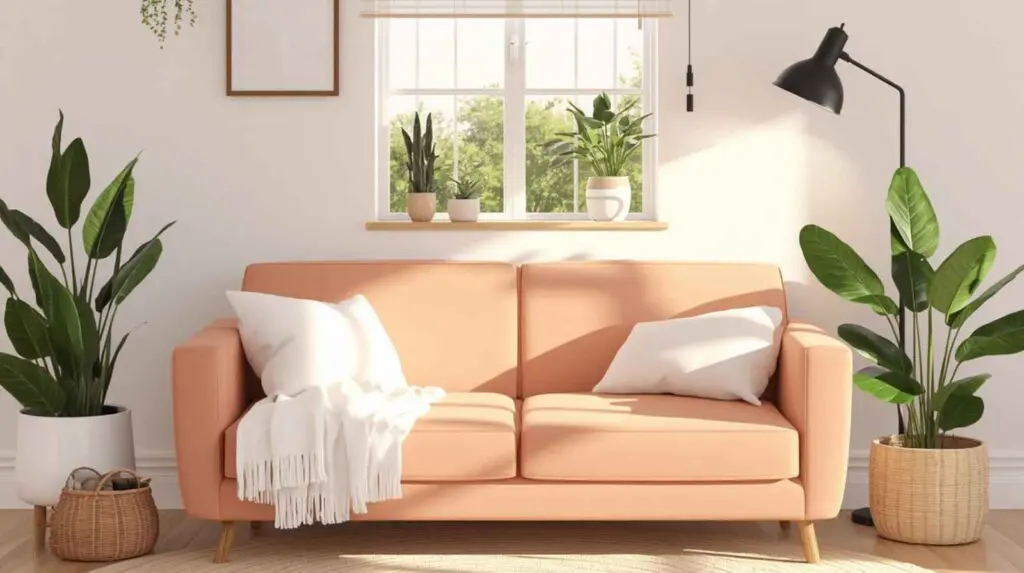
Growing up, I was always aware that my mum was one of the original “domestic goddesses.” She was decluttering, organising, and labelling decades before influencers turned it into swoon-worthy content.
To my shame, I never really had to lift a finger (aside from the washing up and the occasional cup of tea), so you can imagine my shock when I moved into university accommodation… and my room didn’t magically maintain itself.
Very quickly, it descended into chaos.
At first, it didn’t seem like a big deal. It was only one room, after all. But slowly, something shifted. I couldn’t fully relax. My focus slipped. Everything just felt a little bit… off.
That was the moment I realised something important: Your environment quietly shapes how you feel, think, and function.
Since then, I’ve always prioritised my space—and even more so now. Living with a chronic illness means that visual chaos can genuinely worsen my cognitive fatigue and make proper rest feel impossible. It’s no longer just about aesthetics. It’s about well-being.
The Science Behind How Your Home Affects Your Mood
This isn’t just a personal preference—it’s backed by science.
The field of Environmental Psychology explores how our physical environment impacts our emotions, behaviour, and mental health.
Research has shown that:
- Cluttered environments can increase levels of cortisol (your stress hormone)
- Visual chaos can overload your brain, making it harder to focus and process information
- Calm, organised spaces can promote relaxation, clarity, and better sleep
In short: your home isn’t just where you live – it actively influences how you feel every single day.
But What If You Like a “Full” Space?
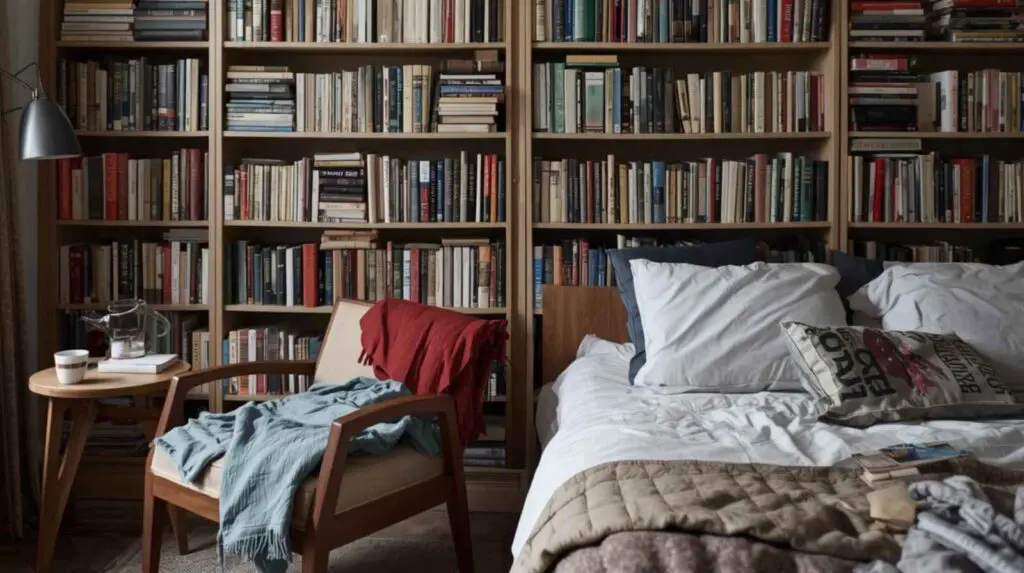
Let’s be clear: not everyone thrives in minimalist, clear-cut environments—and that’s completely okay.
In fact, some studies suggest that more visually stimulating spaces can:
- Boost creativity
- Encourage “out-of-the-box” thinking
- Support a more flexible, unconventional cognitive style
And honestly? I love that. Because this isn’t about forcing everyone into the same aesthetic.
The Real Question: When Does “Creative” Become “Overwhelming”?
There’s an important distinction here.
When a full space helps:
- It feels inspiring
- You know where things are
- It supports your way of thinking
When it starts to hinder:
- You feel overwhelmed just looking at it
- You can’t find what you need
- It raises your stress levels
- It drains your energy instead of supporting it
That’s the tipping point.
And if you’re reading this, chances are… you’ve felt it.
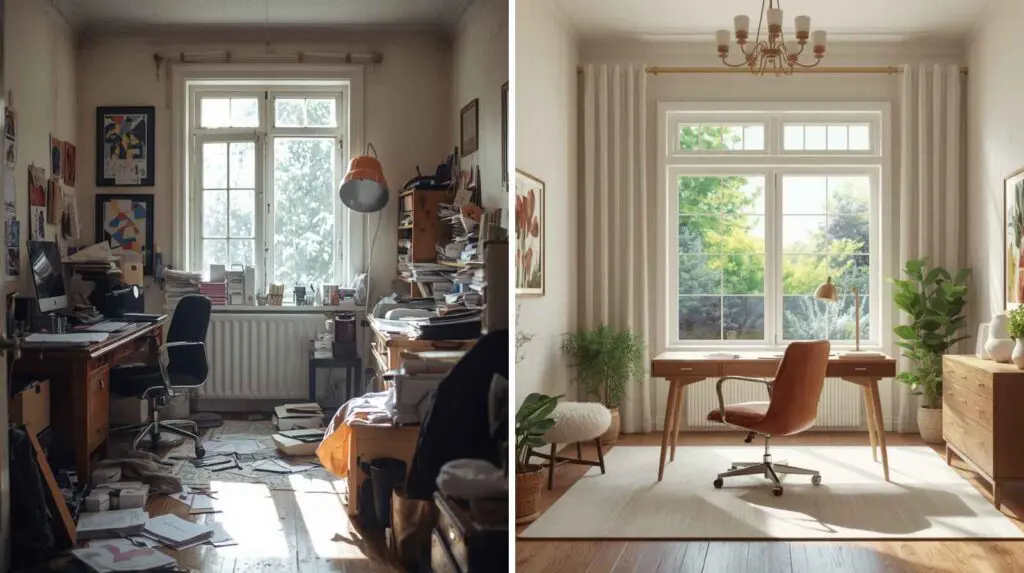
My Go-To Decluttering Strategies (That Actually Work)
These are the exact strategies I use myself – simple, realistic, and designed to create quick wins without overwhelm.
01. Start With Rubbish First (The Instant Mood Boost)
This is the easiest win.
Grab a bag and:
- Bin what needs binning
- Recycle what you can
- Remove anything that’s clearly “done”
It’s quick, requires zero decision-making, and gives you an immediate lift.
02. Focus on What You Can See
If you’re short on time or energy, this is your best friend.
Clear:
- Kitchen worktops
- Coffee tables
- Desks
- Bedside tables
Even if cupboards are still chaotic, your space will feel calmer instantly – and that visual shift makes a huge difference to your mood.

03. Use the “I Don’t Care About This” Method
If decluttering a whole room feels overwhelming, skip the room-by-room approach.
Instead, declutter by category—starting with things you feel least attached to:
- Old DVDs or CDs
- Clothes you rarely wear
- Books you won’t re-read
- Kids’ toys
- Random stationery
The goal here is momentum.
You’ll make faster decisions, see quicker progress, and build confidence to tackle the harder stuff later.
04. The 3-Pile Rule (With a Safety Net)
Every item you sort goes into one of three categories:
- Keep
- Donate/Sell
- Bin/Recycle
Why this works:
- It removes decision fatigue
- It creates a clear system
- It keeps the process moving

If you struggle to let go (I did too), add a fourth option: The 90-Day Box.
Place unsure items in a box and store them away. If you haven’t needed or missed anything after 90 days, it’s safe to let it go.
(And yes—seasonal items like Christmas decorations get a free pass!)
Additional Quick Wins for a Calmer Space
When you need a reset but don’t have the energy for a full declutter:
- Open a window (fresh air genuinely shifts how a room feels)
- Make your bed—it anchors the whole room
- Put on soft lighting instead of harsh overhead lights
- Light a candle or use a calming scent
- Grab a basket and load it with anything that doesn’t belong in the room it’s currently in.
- Do a 10-minute “reset tidy” (set a timer and stop when it ends)
Small shifts can create a surprisingly big emotional impact.
A Gentle Tool to Support You
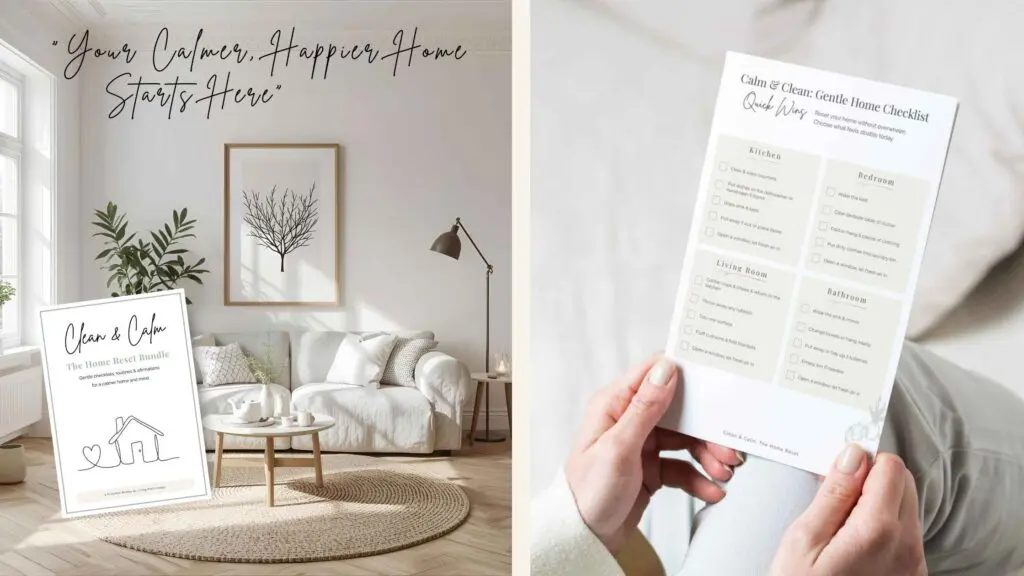
If you’re looking for something a little more structured (but still gentle and realistic), I’ve created something to help.
My Clean & Calm Mental Health & Well-being Bundle is designed to support both your space and your mindset- without pressure or perfection.
Inside, you’ll find simple, printable tools to help you:
- Declutter without overwhelm
- Build calming routines
- Track your mood and energy
- Create a home that actually supports you
Because sometimes, a little guidance makes all the difference.
Common Questions about Improving Your Space
How does your home environment affect your mood?
Your home environment affects your mood by influencing stress levels, focus, and emotional well-being. Cluttered spaces can increase cortisol, while calm spaces promote relaxation.
Can clutter really cause stress?
Yes, research shows that clutter can raise stress hormones, overwhelm the brain, and make it harder to focus or relax.
Is being messy always a bad thing?
No. Some people thrive in visually busy environments, especially those who value creativity. The key is whether your space feels supportive or overwhelming.
What is the fastest way to make your home feel calmer?
Start by clearing visible surfaces, removing rubbish, and doing a quick 10-minute tidy. Small changes can create an immediate sense of calm.
How do I declutter when I feel overwhelmed?
Start small—focus on one category or surface, use the 3-pile method, and build momentum with quick, easy decisions first.
Your home doesn’t need to be perfect…

It doesn’t need to look like something out of a magazine.
But it does need to support you.
Whether that means clear surfaces, cosy corners, or a slightly chaotic but creative space—what matters most is how it makes you feel.
And if your environment is currently adding to your stress rather than easing it… start small.
One surface. One drawer. One quick win.
Because those small shifts?
They add up to something much bigger – a space that finally feels like it’s working with you, not against you.
What sort of environment do you find you thrive in at home? Did you know how your home affects your mood? Have you used any of my recommended decluttering strategies before – or do you have any of your own to add? Whatever you’d like to say, or ask, please do. I’m happy to help and I always love to hear from you.
Source References:
- McMains, S., & Kastner, S. (2011). Interactions of top-down and bottom-up mechanisms in human visual cortex
- Saxbe, D. E., & Repetti, R. L. (2010). No place like home: Home tours correlate with daily patterns of mood and cortisol
- Princeton University Neuroscience Institute: Effects of clutter on focus and productivity
- Vohs, K. D. et al. (2013). Physical order produces healthy choices, generosity, and conventionality, whereas disorder produces creativity
- American Psychological Association: Stress and environmental factors


