

Have you ever sat down with every intention of getting something done, only to find yourself checking your phone, staring out of the window or jumping between tasks?
If so, you’re certainly not alone.
In today’s fast-paced world, distractions seem to be everywhere. Notifications, emails, social media, busy schedules and mental overload can all make it harder to stay focused. Many people find themselves feeling frustrated by their inability to concentrate, especially when they have important tasks to complete.
The good news is that focus isn’t simply something you’re born with. It’s a skill that can be supported and strengthened through small, practical habits.
If you’re looking to boost focus, improve concentration and feel more productive without burning yourself out, these simple strategies can help.
In This Post You’ll Discover:
- Why it can be difficult to stay focused
- Common reasons people lose concentration
- How to boost focus naturally
- Practical habits that support attention and productivity
- Simple ways to reduce distractions and mental overload
Why Do We Lose Focus?
Before learning how to boost focus, it helps to understand why concentration can sometimes feel so difficult.
Focus requires mental energy. When that energy is stretched too thin, our ability to concentrate often suffers.
Common reasons people lose focus include:
- Stress and anxiety
- Lack of sleep
- Mental fatigue
- Information overload
- Constant notifications and interruptions
- Trying to multitask
- Poor work environments
- Lack of clear priorities
Modern life places enormous demands on our attention. In many ways, our brains are constantly being asked to switch between different tasks, conversations and sources of information.
The result? We can end up feeling mentally scattered even when we’re trying our best.
The encouraging news is that small changes can often make a significant difference.

Why Focus Matters
Being able to focus isn’t just about getting more work done.
Strong focus can help you:
- Complete tasks more efficiently
- Feel less overwhelmed
- Reduce stress
- Improve decision-making
- Increase confidence
- Create more free time for rest and relaxation
When you’re able to give your attention fully to one thing at a time, tasks often take less time and require less effort than when you’re constantly distracted.
10 Practical Ways to Boost Focus
1. Start With One Clear Priority
One of the quickest ways to lose focus is to try doing too many things at once.
Instead of creating a long to-do list, identify the single most important task you want to complete first.
Knowing exactly where to direct your attention can make it easier to stay on track.
2. Reduce Digital Distractions
If you’re trying to boost focus, your phone is often the best place to start.
Consider:
- Turning off non-essential notifications
- Using Do Not Disturb mode
- Placing your phone out of reach
- Closing unnecessary browser tabs
Even brief interruptions can break concentration and make it harder to regain momentum.

3. Work in Short, Focused Blocks
Many people assume focus means concentrating for hours at a time.
In reality, shorter periods of focused work can often be more effective.
Try working for 25 to 45 minutes before taking a short break. This helps prevent mental fatigue and keeps your attention fresh.
4. Take Regular Breaks
It may sound counterintuitive, but taking breaks can actually help boost focus.
Our brains need opportunities to rest and reset.
A short walk, a stretch, or a change of scenery can help restore attention and improve concentration when you return to your task.
5. Get Enough Sleep
Sleep plays a crucial role in attention, memory and cognitive performance.
When you’re tired, staying focused often feels much harder.
Prioritising good sleep habits can be one of the most effective long-term strategies for improving concentration.

6. Create a Focus-Friendly Environment
Your surroundings can have a significant impact on your ability to concentrate.
Consider:
- Clearing visual clutter
- Reducing noise where possible
- Keeping essential items within reach
- Creating a dedicated workspace
A calmer environment often supports a calmer mind.
7. Stop Multitasking
Despite its reputation, multitasking rarely improves productivity.
Research suggests that switching between tasks can increase mistakes and reduce efficiency.
If you want to boost focus, give yourself permission to focus on one thing at a time.
8. Support Your Physical Wellbeing
Your brain relies on your body functioning well.
Simple habits such as:
- Staying hydrated
- Eating balanced meals
- Moving regularly
- Spending time outdoors
Can all support concentration and mental performance.
9. Write Down Mental Clutter

Sometimes it’s difficult to focus because your mind is trying to remember dozens of things at once.
Keeping a notebook nearby for reminders, ideas and tasks can help clear mental space and allow you to focus on what’s in front of you.
A quick brain dump can often work wonders.
10. Be Realistic About Your Energy Levels
Focus naturally fluctuates throughout the day.
Rather than fighting against this, try noticing when you feel most alert and schedule important tasks during those periods.
For many people, working with their energy rather than against it can dramatically improve concentration.
A Helpful Mindset Shift
If you’re struggling to focus, it’s easy to assume you’re lazy, unmotivated or not trying hard enough.
In reality, focus is influenced by many factors, including stress, sleep, workload and overall wellbeing.
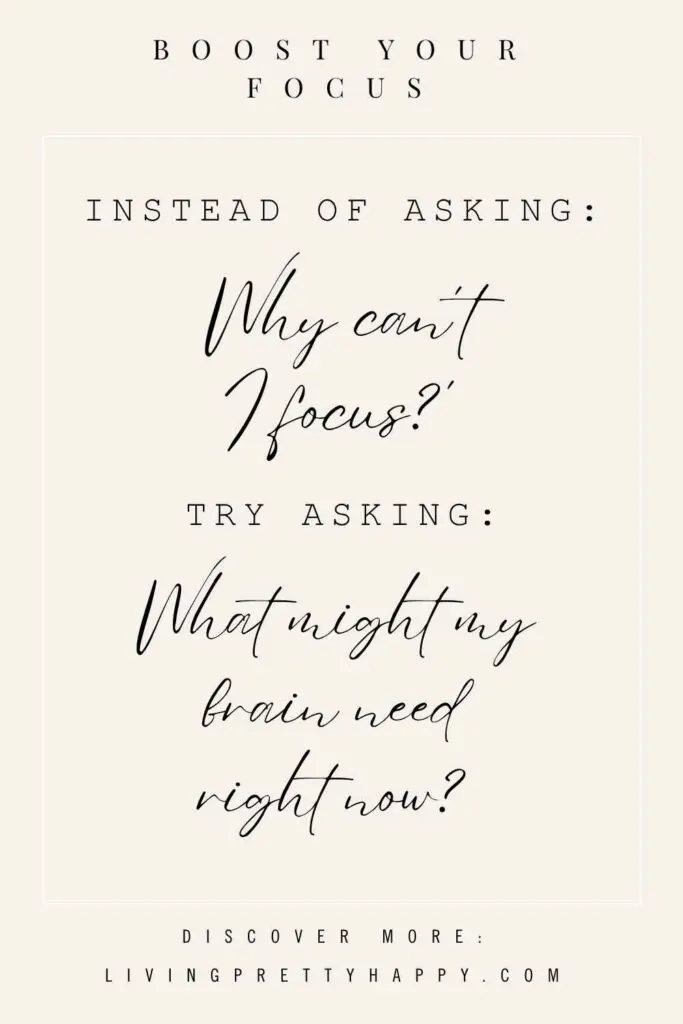
Instead of asking:
“Why can’t I focus?”
Try asking:
“What might my brain need right now?”
Sometimes the answer is fewer distractions. Sometimes it’s more clarity. Sometimes it’s simply rest.
Approaching focus with curiosity rather than criticism can often lead to better results.

Final Thoughts
Learning how to boost focus isn’t about becoming productive every minute of the day. It’s about creating conditions that help your brain do its best work.
By reducing distractions, taking care of your wellbeing and working with your natural energy levels, you can improve concentration without relying on willpower alone.
Remember, losing focus occasionally is completely normal. The goal isn’t perfection. It’s building small, sustainable habits that help you return your attention to what matters most.
Over time, those small changes can make a remarkable difference to your ability to focus, feel less overwhelmed and get more done.
How do you find you are with focusing? Are there any of the tips that you already use? How have you found it? Do you have any top tips of your own to boost focus? Whatever you’d like to say – or ask – please do. Just leave me a comment in the box below. I’m happy to help, and I always love to hear from you.
Source References:
National Health Service (NHS). Sleep and Mental Wellbeing Resources.
https://www.nhs.uk
American Psychological Association. Attention, Stress and Cognitive Performance.
https://www.apa.org
Harvard Health Publishing. How Stress Affects Concentration and Memory.
https://www.health.harvard.edu
Mayo Clinic. Stress Management and Mental Focus.
https://www.mayoclinic.org
Cleveland Clinic. Why You Can’t Focus and What to Do About It.
https://health.clevelandclinic.org