
ADVERTISEMENT FEATURE: SPONSORED CONTENT
There’s a moment every year when you look up from the kitchen counter and realize it’s already dark. It’s barely five o’clock. Your first instinct might be to curl up on the sofa, grab your phone and scroll until bedtime.
I get it. I’ve spent more evenings than I’d like to admit doing exactly that. But after a few nights of the same routine, I noticed I was feeling flatter rather than rested. What made a difference was giving my hands something to do. Not a big project or another personal goal, just a small, enjoyable hobby that made those long evenings feel a little more rewarding.
Finding cozy indoor hobbies to enjoy during the colder months can be a lovely way to make more of your time at home. Here are a few ideas worth trying, along with some simple ways to make a new hobby part of your routine.
Why Hobbies Help When the Weather Turns
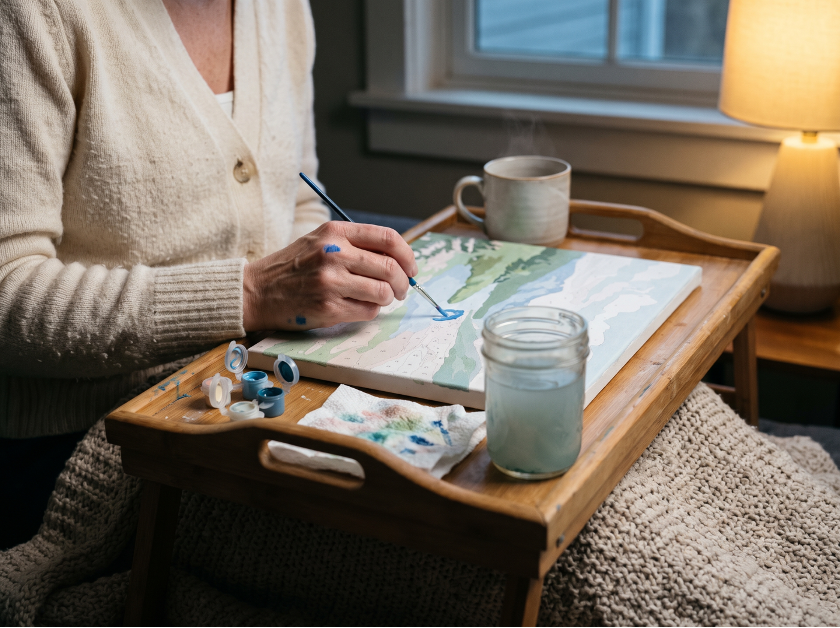
If you’re looking for a place to start, one of the easiest cozy indoor hobbies for colder months is paint by numbers. You don’t need to know how to draw or have any previous artistic experience. The canvas shows you which color goes where, and you simply work through each small section at your own pace. Before you know it, an hour has passed, you’ve had a chance to switch off from everyday distractions, and you’ve created something you can hang on the wall.
It’s also worth remembering that seasonal changes can affect how we feel. According to the Cleveland Clinic, around 5% of adults in the U.S. experience seasonal affective disorder (SAD), while another 10% to 20% may experience a milder form of the winter blues.
The Cleveland Clinic’s overview of seasonal depression is worth reading if your low mood feels more persistent or is beginning to affect everyday life. It’s important to remember that taking up a hobby isn’t a treatment for depression or SAD. If you’re struggling with ongoing low mood, speak to your healthcare provider.
An enjoyable hobby can offer a little structure, something positive to look forward to, and an opportunity to spend time doing something you genuinely enjoy.
Research also supports the wider benefits. A 2023 study published in Nature Medicine, involving more than 93,000 adults aged 65 and over across 16 countries, found that having a hobby was associated with fewer depressive symptoms, as well as higher levels of happiness and life satisfaction.
The researchers also found that these associations held across countries. Although the study was observational and can’t prove that hobbies directly improve mental wellbeing, it offers encouraging evidence of the value of making time for enjoyable activities.
Cozy Indoor Hobbies to Try on Dark Evenings
Paint by numbers is my first recommendation for anyone who says, “I’m just not creative.” The beauty of it is that you don’t need to be particularly artistic. The enjoyment comes from concentrating on the small details and watching your picture gradually take shape.
Put on a podcast, choose your colors and don’t worry about whether the finished result is perfect. Nobody’s grading you!
Knitting and crochet are other lovely options. The repetitive movements can feel relaxing, and having a half-finished scarf or blanket waiting beside the sofa gives you something enjoyable to return to. If you’ve never picked up a crochet hook, start with something simple, such as a dishcloth. It’s practical, forgiving and a slightly uneven row really doesn’t matter.
Candle making is another hobby worth exploring. Creating your own candles can be a satisfying way to spend an afternoon, and you can experiment with different colors, containers and fragrances. It does require some preparation, though. Wax can be messy and gets very hot, so make sure you have a suitable workspace, follow the manufacturer’s safety instructions, and protect your surfaces before you start.
All these hobbies need a little space, which is often where we put off getting started. I found that making room for a craft corner was half the battle. Clearing one shelf or cupboard is plenty. You don’t need a dedicated studio or an entire room.
Hobbies for the Kitchen and Windowsill
Some winter hobbies don’t even feel like hobbies. Making slow-cooked soups and baking homemade bread are two of my favorites. Kneading dough can be a satisfying, hands-on activity, and there’s something lovely about the smell of freshly baked bread filling the house on a cold day.
Growing indoor herbs is another easy way to bring a little greenery into your home. A pot of basil or mint on the windowsill gives you something to look after when everything outside looks bare. Even a couple of minutes spent watering and tending to your plants can become a pleasant part of your day.
Just be realistic about the amount of natural light available. A north-facing windowsill in January may not provide enough sunlight for some herbs, so a small grow light could be worth considering.
Then there’s journaling, which requires little more than a notebook and a pen. You don’t need to write pages of thoughts or follow a complicated routine. Three lines a night are plenty:
- One thing that went well.
- One thing that was difficult.
- One thing you’re looking forward to.
Pair your journaling with a comfortable reading nook and a cup of tea, and you’ve created an enjoyable way to spend part of your evening without needing to do anything particularly elaborate.
If you’re still finding your footing with seasonal routines, my tips for keeping wellness habits going in autumn pair nicely with any of these ideas.
How to Choose One and Actually Stick With It
The trouble with a list of lovely hobby ideas is that it’s easy to nod along, feel inspired and then change nothing. So, how do you choose something you’ll actually enjoy doing?
Start by considering your energy levels. On evenings when you’re tired, choose something simple and repetitive, like knitting or completing a jigsaw puzzle. If you have a little more energy, paint by numbers or journaling might appeal. Save baking and candle making for days when you have more time and energy.
Next, think about your budget and how much time you realistically have available. You can start most of these hobbies without spending a fortune. Set a budget before shopping, and resist the temptation to buy an expensive kit or lots of supplies before you’ve decided whether you enjoy the activity.
Then try the 20-minute rule. Promise yourself that you’ll spend just twenty minutes on your new hobby. If you’re enjoying it, carry on. If not, stop without feeling guilty. You’re allowed to try something and decide it’s not for you.
There’s some encouraging research behind taking up a new interest, too. An earlier study by Daisy Fancourt and colleagues analysed data from 8,780 adults aged 50 and over participating in the English Longitudinal Study of Ageing. It found that taking up a new hobby was linked to about 30% lower odds of depression.
As with the later research, this was an observational study, so it doesn’t establish that taking up a hobby directly prevents depression. However, it’s another interesting finding that highlights the potential value of making time for activities you enjoy.
Finally, consider involving a friend. Sharing a photo of your progress with someone or arranging a regular craft evening can add a social element and give you something to look forward to. Sometimes, knowing someone else is joining in is all the motivation you need to get started.
Make It a Ritual
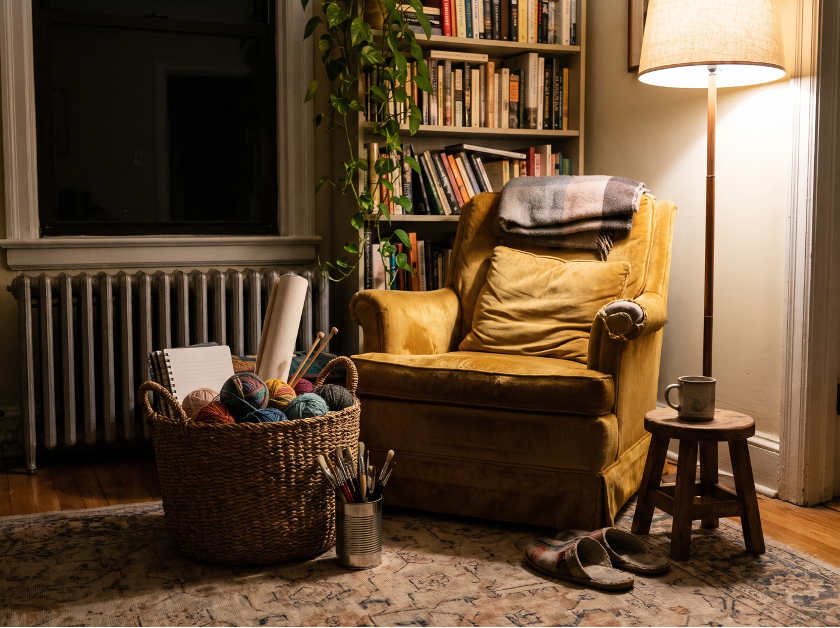
A hobby is easier to return to when it has a dedicated place and time. Mine lives in a corner of the living room, with a lamp, a basket of supplies and a cozy throw blanket. When I sit down there, I already know what’s coming.
Try keeping your supplies somewhere visible and accessible. If your paints are tucked away in a closet, you’re less likely to reach for them. If they’re in a basket beside your favorite chair, getting started feels much easier.
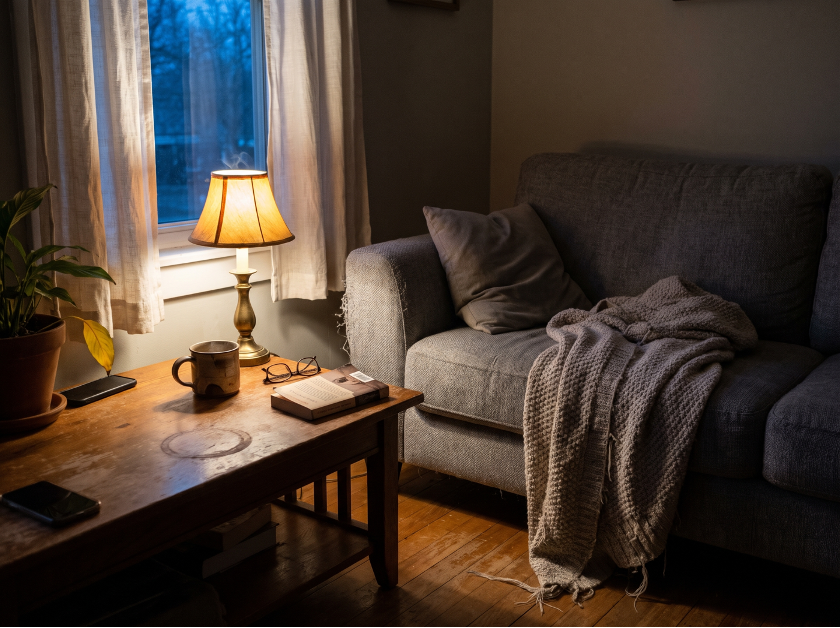
Switch on a warm lamp instead of relying on the overhead lighting, and consider leaving your phone in another room so you’re less tempted to scroll. Sometimes, making a few small changes to your surroundings can make all the difference.
Pour yourself something warm, too. Tea, hot chocolate or whatever makes the moment feel like a treat can help turn your hobby into something you genuinely look forward to.
Over time, repeating the same little routine can help it become a familiar part of your evenings. If you’d like to understand more about why the winter months affect some people more than others, this overview of seasonal affective disorder explains the science behind it.
You can also track your progress in a simple way. Make a tally in your journal, take a photo of your canvas each week or use a row counter for your knitting. Seeing how far you’ve come can give you a little sense of achievement.
Start Small This Week
You don’t need to completely overhaul your evenings or suddenly become an expert at something new. Pick one hobby from this list, set aside twenty minutes and see how it feels.
Maybe it’s a paint-by-numbers canvas and a mug of tea. Perhaps it’s a pot of basil on the windowsill or a few rows of knitting before bed.
The darker evenings will arrive, whatever you do. But you can choose to make a little more of that time by finding something enjoyable that gives you a reason to look forward to being at home.