

ADVERTISEMENT FEATURE: SPONSORED CONTENT
Most routine advice assumes you wake up at 6:30, work until 5:00 and wind down by 10:00. That’s fine if your life follows a typical 9-to-5 schedule. But it quickly falls apart when your shift ends at 7:00 p.m., just as everyone else is sitting down to dinner.
Nurses know this challenge all too well. Sleep patterns change, meals get squeezed in, and self-care can start to feel like one more thing on an already full to-do list.

The good news is that building calm routines for nurses doesn’t depend on having a fixed schedule. It’s about finding a few simple habits that travel with you from one shift to the next, while keeping as much control over your working hours as possible.
With a little planning and some realistic expectations, it’s possible to create a routine that supports your wellbeing, even when your working week looks different every time.
Why Nurses’ Schedules Make Balance Harder
Nurses working in hospitals and nursing facilities provide round-the-clock care, which means nights, weekends, and holidays often come with the territory. The U.S. Bureau of Labor Statistics notes that registered nurses in these settings may also work on call. With approximately 3.5 million registered nurse jobs in 2025, that’s a considerable workforce navigating irregular working hours.
The challenge isn’t simply the hours themselves. It’s often the lack of control over them. When your schedule is decided for you, the rest of your life has to fit around work. With more choice, work can fit more comfortably around your life.
That’s one reason many healthcare facilities have introduced healthcare scheduling and staffing software that lets nurses view available shifts and choose those that better suit their circumstances, rather than simply accepting whatever they’re assigned.
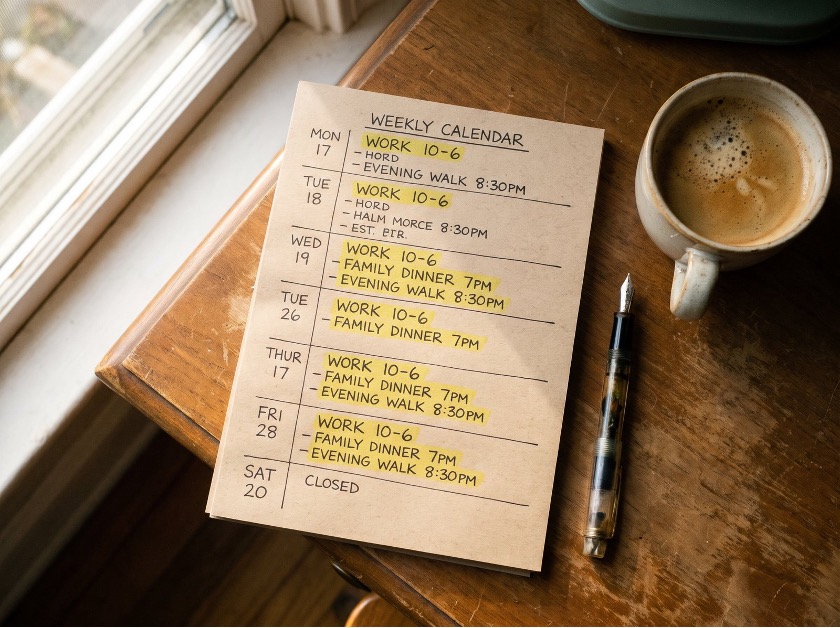
Having some control over your working hours matters. A lack of flexibility can take its toll on wellbeing, particularly when you’re trying to balance professional responsibilities with family life and time to recharge.
In the American Nurses Foundation’s 2023 survey of more than 7,400 nurses, 56% reported burnout and 40% said they had poor control over their workload. While the survey is a few years old, more recent AMN Healthcare findings point to similar concerns.
Building Calm Routines for Nurses: Small Habits That Make a Difference
One of the biggest challenges when creating calm routines for nurses is that a rigid schedule can fall apart the moment a shift runs late.
A better approach is to build small habits around things that happen anyway, such as waking up, arriving home or getting ready for bed.
These everyday moments can become useful anchors, helping you create a little consistency without needing to follow the same timetable every day.
Start with one small habit and attach it to something you already do. Drink a glass of water when you wake up, whether that’s 5:00 a.m. or 3:00 p.m. Try two minutes of stretching as soon as you take off your shoes after work.
Small, repeatable actions can make self-care feel more manageable. For more ideas on making healthy habits stick, see our sustainable self-care tips.
Preparing for your shift can become another helpful anchor. Pack your bag, lay out your scrubs and prepare a meal before you’re tired and running short on time. Even ten minutes of preparation beforehand can make the start of a busy shift feel less rushed.
Create a Wind-Down Ritual for After Your Shift

After twelve hours of being alert and responding to other people’s needs, switching off isn’t always easy. Your body won’t automatically settle just because the clock says it’s bedtime.
Instead, create a short wind-down ritual that helps you transition from work to rest. Keeping it simple and repeating the same steps can help signal that your working day is over.
Try dimming the lights, changing out of your work clothes, and putting your phone out of reach. You could also spend a few minutes writing three things in a journal:
- What went well today?
- What’s still on my mind?
- What can wait until tomorrow?
A short evening wind-down can offer a useful chance to pause and give yourself breathing room before bed. It doesn’t need to take more than ten minutes.
For nurses working night shifts, getting enough daytime sleep can be particularly challenging. Blackout curtains can help create a darker sleeping environment, while treating your daytime sleep window as an important appointment can help protect your rest.
Let the people you live with know when you’re sleeping, too. Rest is a necessity, not something you should feel guilty about prioritising.
Choosing Flexibility Without Guilt
Many nurses feel guilty about asking for flexible working hours, as though wanting a more predictable evening or time with family somehow means caring less about their job.
But wanting a better work-life balance is perfectly reasonable.
A 2025 AMN Healthcare survey of 12,171 registered nurses, reported by Staffing Industry Analysts, found that 58% experienced burnout on most days, 81% said flexible schedules would improve their working conditions, and 49% said flexible hours would encourage them to stay in nursing longer.
AMN Healthcare is a staffing company, so it’s worth keeping that context in mind when considering the findings. However, the figures highlight just how important flexibility can be to nurses.
Flexibility also looks different for everyone. A 2026 study published in Nursing Open, analysing per-diem platform data, found a median of just 12 shifts worked per year, with figures ranging from one to 87.
Some nurses take on additional shifts alongside full-time employment, while others prefer to work only occasionally. There’s no single right amount. What matters is finding an arrangement that fits your circumstances, financial needs, and wellbeing.
Learning to say no can also be an important part of protecting your time and energy. You don’t need to provide a lengthy explanation every time someone asks you to take on another shift.
If setting boundaries feels uncomfortable, practising a simple, kind response can help. Our guide to protecting your boundaries offers some useful starting points.
For example, “I can’t take that shift, thanks for thinking of me” is a perfectly reasonable response.
Of course, there are practical considerations, too. Working fewer shifts can mean less income, and flexible work may sometimes bring less predictable pay. Think about what matters most to you this month and review your arrangements as your circumstances change.
A Simple Weekly Reset for Unpredictable Weeks

A traditional Sunday reset assumes that Sunday is a day off. For nurses working rotating shifts, that might not be realistic.
Instead, choose whichever day you have a spare hour and use it to plan the week ahead. You don’t need an elaborate routine or a perfectly organised planner. A few simple steps can make a difference.
01. Map your shifts first.
Write down your working hours first. This gives you a realistic picture of the week and helps you see where you have time available.
02. Protect two non-negotiables.
Choose a sleep window and one block of personal time, such as going for a walk, calling a friend or enjoying dinner with family. Treat these commitments as seriously as you would a work shift.
03. Batch your meals.
If you have a lighter day, prepare a larger meal you can enjoy over several days. Having something ready to eat can make busy evenings easier and reduce the temptation to rely on takeaways when you’re exhausted.
04. Leave some breathing room.
Try not to fill every available hour. Leaving a little space in your week gives you flexibility when shifts overrun, plans change, or you simply need extra rest.
None of these steps will add more hours to your day. They’re simply about making the best use of the time you already have.
The Takeaway
You can’t always control when you work, but you may have more control over your everyday routine than you realise.
Calm routines for nurses don’t have to involve complicated schedules or unrealistic expectations. Small daily habits, a short wind-down ritual and an honest look at how much flexibility you need can all help create a better balance between work and personal life.
Start with one manageable habit this week. Once it becomes part of your routine, you can build from there.
Remember, looking after yourself isn’t an added responsibility to squeeze into an already busy schedule. It’s an important part of making sure you have the time and energy to enjoy life outside work, too.