

Why do we always feel the need to justify taking a break? It seems the longer our to-do list and the greater our level of exhaustion, the larger our badge of honour becomes. In my opinion, that’s just madness.
Why is running ourselves into the ground a good thing? It isn’t! But it seems the guilt associated with resting is often too great to admit. We are a population that applauds productivity and frowns upon rest. Even in lockdown, there was pressure to perform.
Now the Dutch, readily seen as one of the happiest and healthiest people globally, don’t see it this way. Instead, they embrace rest and stillness. Does this make them lazy? Heck no! I think this makes them super smart. With burnout being officially recognised by the World Health Organisation as a chronic illness, learning ways to afford your mind and body some much-needed respite is a crucial step to restoring balance.
Introducing Niksen: The art of doing nothing
Niksen is a Dutch verb that means ‘doing nothing’. It intends to combat work-related health problems such as stress and burnout. As you might guess, there’s not much to it. You literally do next-to-nothing, be it sitting, looking out of a window, or taking a walk in nature, whatever really, as long as it’s without purpose, meaning it isn’t done to achieve something or be productive. I describe it as doing nothing on purpose without purpose.

Whilst I appreciate Niksen sounds similar to mindfulness, it’s not. Mindfulness is about being present in the moment, focusing on your breathing and noticing your thoughts. Niksen, on the other hand, is more about allowing yourself to just ‘be‘, letting your mind wander in whatever direction it likes.
OK, it’s easy to dismiss Niksen as encouraging laziness, but with stress levels continually rising, ‘doing nothing’ is increasingly seen as a positive, stress-busting tactic to hold in your wellness toolbox.
What are the benefits of Niksen?
The main benefit is to help you feel relaxed and calmer, which arguably enables you to be at your most creative, kind and emotionally responsive. Slowing down for a while can reduce anxiety, slow the ageing process and even make you less susceptible to common colds.
People who ‘niks’ have found they become more inspired to achieve their goals and gain clarity on their actions to meet them. On reflection, this resonates with me. Quite often, when I’m struggling with writer’s block or gaining insight into the right decision to make, I’ve found just sitting for a few minutes, looking out of my window and allowing my mind to wander freely often helps me solve my issue (or at least give my latest article a good opening sentence)
Ruut Veenhoven, a Dutch sociologist and pioneering authority on the scientific study of happiness, says, ‘Even when we ‘niks’ or do nothing, our brain is still processing information and can use the available processing power to solve pending problems.’ So although I wasn’t aware what I was doing was ‘nixing’, it explains why this process boosted my creativity and problem-solving ability.
How do you do Niksen?
Doing nothing isn’t as easy as it sounds. Learning to embrace stillness within ourselves and even boredom can prove challenging, especially if you’re programmed to feel the need to make each minute productive.
Start small: When I experimented with nixing for this post, I found the first few times agitating. I felt it was a bit wasteful of my time. I started listing everything I could be doing, what the knock-on effect would be, and once those thoughts had cleared, I began to ruminate – which is in no way helpful for anxiety.
To be honest, I was expecting too much of myself too soon. The best advice is to start with small bursts of nothingness and build-up. Doing nothing had helped me overcome creative block before as I was only doing it for a few minutes at a time. So I tried again. This time I sat comfortably on my sofa, I had a nice view through my window of the guinea pigs exploring their hutch, and I sat quietly for a little while watching them, allowing my mind to wander wherever it wanted. I think I lasted 10-minutes, which was all I needed. It was a helpful little break.
It can take time for us to build up to a level of comfort where we’ll happily do nothing. In the beginning, allow yourself to work up gradually whilst exploring which ways of relaxing suit you best.
Good to know: CALM has a helpful countdown timer to inject 2-minutes of doing nothing into your day. Try it for yourself here.
No screens or social media: I found this a bit bizarre as I find watching TV relaxing, but actually, I don’t switch off when I’m concentrating on what’s happening on the television. The same applies to social media. Therefore, Niksen should be a completely screen-free (and reading free) time.
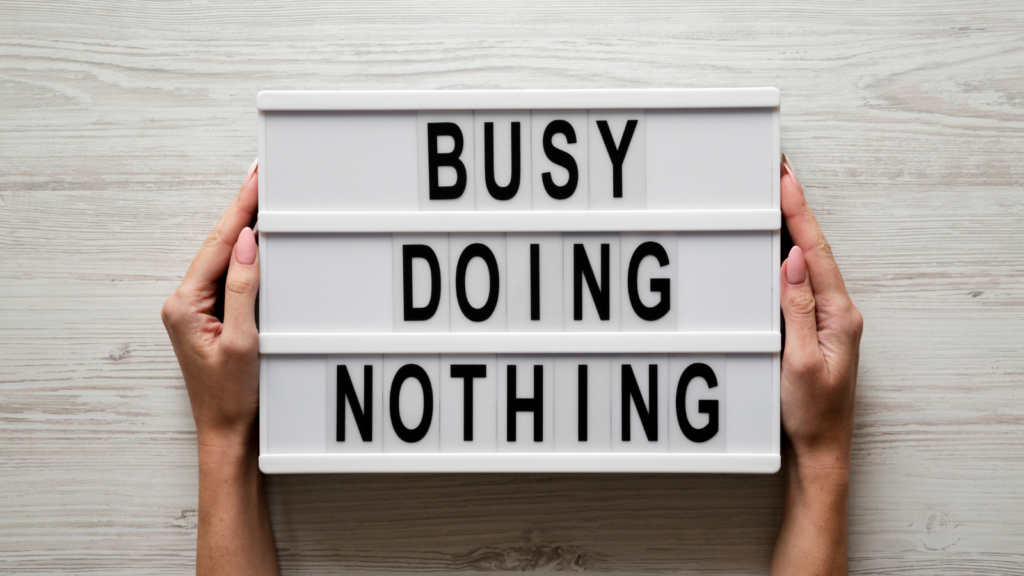
Create the right environment: While you won’t need a dedicated place or set time, moving away from stressful or high energy environments is recommended. Ideally, don’t stay at your work desk or surround yourself with kids bouncing off the walls.
Inject it into your day: I’m a great believer that to make a new habit successful, you need to make it as convenient as possible. Therefore, take advantage of idle moments throughout your day. Rather than checking your phone whilst you wait for the kettle to boil, do nothing. Don’t pick up a magazine or do a social media scroll whilst you’re waiting for your appointment time, take a seat and do nothing. Why not people watch at the coffee shop? Or sit and just wait for the Zoom meeting to start, do whatever fits in with your lifestyle.
Top Tip: I’ve found benefit from taking a few minutes out when my brain begins to feel full. It’s helpful to become aware of when you’re reaching the point of ‘that’s enough’; that’s the perfect time to give yourself a few minutes of unfocused idleness and just breathe.
Remove the guilt: One of the most significant barriers to rest is guilt. That need to not feel judged or perceived as ‘lazy’. Yes, we do need to maintain a balance between relaxation and productivity – both are critical components for increased well-being – however, it’s important to remember self-care is not selfish.
“Niksen provides relief for people who feel overwhelmed by the pace of life. We need to take downtime seriously and stop seeing doing nothing as a waste of time. It can actually be the best use of your time”
Sandi Mann, Author of The Science of Boredom.
If you’re still struggling to release the guilt, why not try some affirmations before you do Niksen, such as:
- I deserve to rest
- Rest brings me greater strength, energy and focus
- Pausing now makes me more productive later
- Looking after myself helps me look after others
- I am right to prioritise my mental and physical health
The benefit of being less busy…
It would be fantastic if society would accept rest more positively; if being balanced was more applauded than being busy. Perhaps, if we could all realise the importance (and helpfulness) of taking regular time to reset, switch off and do nothing, we’d all be much happier. Rest is not something we should be ashamed about or apologise for; it’s something we – like the Dutch – should learn to embrace. The potential benefits for our health & well-being make time spent doing nothing (in my opinion) too good to ignore.
RELATED: How to Make Activities More Mindful & Why You’ll Feel Happier For It.
Have you heard of Niksen before? How does taking a break and doing nothing make you feel? Do you believe you have the balance right or do you feel you could be resting more? Whatever you’d like to say – or ask – please do, I’m happy to help and I always love to hear from you. Just leave me a comment in the box below.
Source References:
- https://journals.sagepub.com/doi/abs/10.1177/0956797612446024
- https://time.com/5622094/what-is-niksen/
- https://www.womanandhome.com/health-and-wellbeing/niksen-art-doing-nothing-benefits-340476/
- https://longevitylive.com/anti-aging/niksen-the-longevity-benefits-of-doing-absolutely-nothing/
ADVERTISEMENTS:




This article was very helpful and informative for those of us who struggle with taking a break. I’m definitely going to give Niksen a try.
Thank you, I’m happy to hear that and I hope you find it helpful when you give it a go x
Thanks for such an interesting and useful post Alex. Like you and many others, I find that when I actually allow myself to do nothing, that’s when I actually become more productive. For this reason, I find it strange that we don’t allow ourselves time to just do nothing. I definitely want to incorporate this technique into my days, although, I think I may struggle with the feeling of guilt; I think your affirmations will definitely help with that though!
Gemma x
Thank you Gemma! It is strange, isn’t it! Definitely give it a go and yes, I came up with the affirmations as I really needed to tell myself these things too, so I hope they help you too – enjoy your ‘nixing’ x