

Gelong Thubten wasn’t exactly who I was expecting when I sat to listen to a Buddhist monk speak about happiness.
In my mind, monks were quiet, unassuming and dare I say it, non-relatable. Yet, here was a man full of presence & personality – who 25-years previously had been an actor living a wild & excessive lifestyle in New York.
And whilst he did have the shaved head & clothes of a Buddhist monk, that was where my ill-conceived stereotype ended. He was in fact very relatable. Not that I’m saying I can personally relate to living a wild & excessive lifestyle in New York but more that he seemed to get life. To get the demands & challenges. To understand what it’s like to feel unhappy or unfilled.
When he spoke he didn’t look down from a pedestal of righteousness, more embraced you in a compassionate hug with his words. I knew this was someone who would be able to teach me a thing or two.
In fact, I have learnt a lot from him. I’ve heard him speak twice now, took part in a guided meditation led by him and read his book – A Monk’s Guide to Happiness*.
Although he’s taught me more than I have room here to share (believe me, I am really condensing his teaching here), these are just some of the key things this particular Buddhist monk has to say about happiness…
We need to stop searching for happiness.

We always seem to be in search of happiness. If I have this I’ll be happy. If I do this I’ll be happy. Always looking externally for it, yet, never seeming to realise happiness is simply a feeling that dwells within us.
Yes, ‘things’ can give us that instant dopamine hit which we’re so accustomed to these days, but the feeling is fleeting. Before we know it, we’re off in pursuit of happiness again. When actually, the mere act of searching for happiness is a declaration that we don’t quite have it yet.
What is happiness anyway? Thubten explains happiness as a feeling of “being completely in the present with no urge to hang on to the past or ruminate about the future; we are right in the moment, feeling complete.” Sounds blissful doesn’t it!
Unlocking the happiness already inside of you.
During a 4-year long meditation retreat (yes, 4-YEARS!) Thubten learned that happiness is a choice. And most importantly, it is something we can learn to tap into within ourselves.
To unlock happiness we need to alter our relationship with our thoughts & emotions, to realise there is space surrounding them, that they are not absolutes. We need to understand our thoughts are not the ‘enemy’ it’s our trying to control them where we run into difficulty. Within all of our minds there is opportunity for freedom, completeness & peace – which in itself is a state of happiness is it not?

How exactly do we achieve this?
Thubten understood clearly what could bring lasting happiness to our lives rather than the short-term, unsatisfying type of ‘buzz’ which ultimately leaves us hungry for more. He realised the key was a daily practice of meditation coupled with multiple micro-moments of mindfulness throughout each day.
Meditating allows us to cultivate inner-peace, learning to be comfortable in the moment. Instead of letting things spin out of control, we learn to become connected and centred, even against the backdrop of our busy modern lives.
Just 10-minutes of meditating per day will help us re-wire to become more comfortable with our emotions and less driven by them. But most importantly, for it to work, it needs to become a habit.
Additionally, pairing your meditation with several micro-mindful moments during the day will help to integrate the power of meditation into your life. As Thubten says, ‘tapping into that mindful state many times per day is the fast track to happiness’
What is a mindful moment? You can create a mindful moment whilst washing your hands or brushing your teeth or walking up stairs – any mundane physical task will do. These simple actions become “the pegs on which to hang your mindfulness.” Simply focus on the physicality of the task. The sensations, the smells, the feelings – allowing the mind to focus on what you’re doing. If your mind starts to wander, that’s fine – just bring your mind gently back to the physical activity you’re undertaking.
Meditation tips from a master:
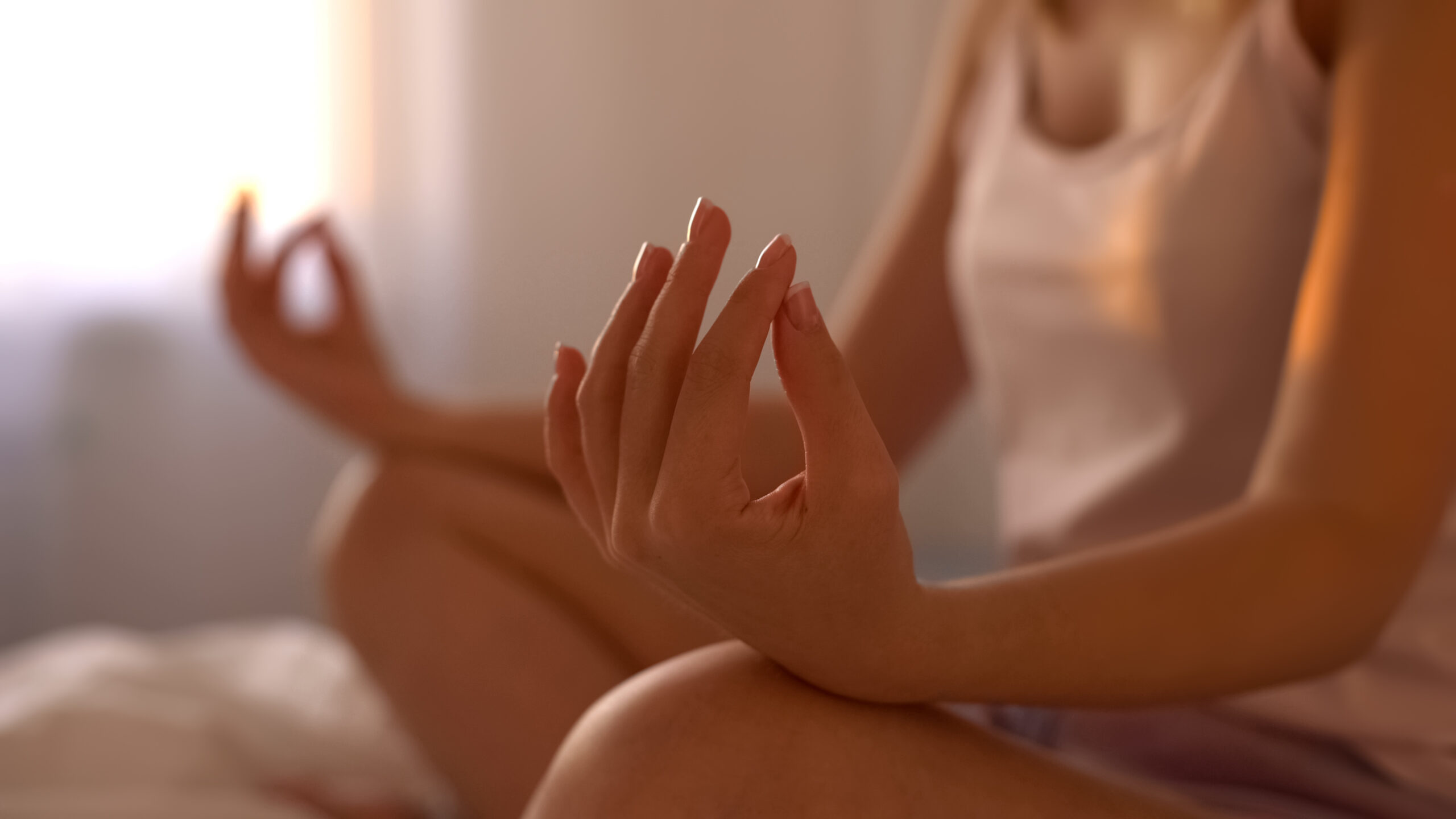
My intention is not to walk you through a meditation here, there are a plenty of guided meditations freely available out there – not to mention, A Monk’s Guide to Happiness* includes a wealth of practical exercises.
However, there are a few tips I picked up from Thubten (ones maybe not so commonly known) that I wanted to share with you…
- Meditate with your eyes open! Contrary to popular belief, it’s better to meditate with your eyes open. Not particularly focusing on anything, more looking into space. You could focus on a lit candle if that helps. As Thubten explains, “Meditation cultivates a type of relaxation that contains clarity and awareness. With the eyes open you can develop greater mental clarity rather than sliding into a dull or sleepy state. Meditating with the eyes open is a statement that everything is fine just as it is, that there is no need to get rid of anything.”
- Try to have a wall behind you. As well as making sure the room you’re in is relatively quiet & comfortable (not too hot or too cold) positioning yourself with a wall behind you will provide a sense of security.
- Establish compassion. Take a moment at the start and end of each session to set an intention to meditate not just for your own benefit, but also for the benefit of others. This can be very powerful as it connects us to a deeper reason for meditating, giving your practice purpose.
- Set a timer. To help your focus further, use a timer to time your session. That way you won’t have to worry about how long it’s been or how long you have left. However, try to make sure you pick a gentle alarm to notify you of the end of your session.
- It’s OK for the mind to wander. In fact, it’s helpful when it does. There are 3-phases to any meditation. The 1st phase where we are fully focused, concentrating fully on our breathing. The 2nd phase where we realise our minds have wandered – this is known as noticing; and the 3rd phase where we return our attention gently back to the breath. All 3-phases are important & have value – therefore thoughts actually aid our meditation!
- Meditate in the morning. Our cortisol levels are highest at this time, so it’s a good opportunity to help bring those levels back to normal. Plus it’s setting the tone for how we would like our day to continue. However, it’s more important that you are actually meditating daily, so if mornings aren’t possible for you, practice when you can.
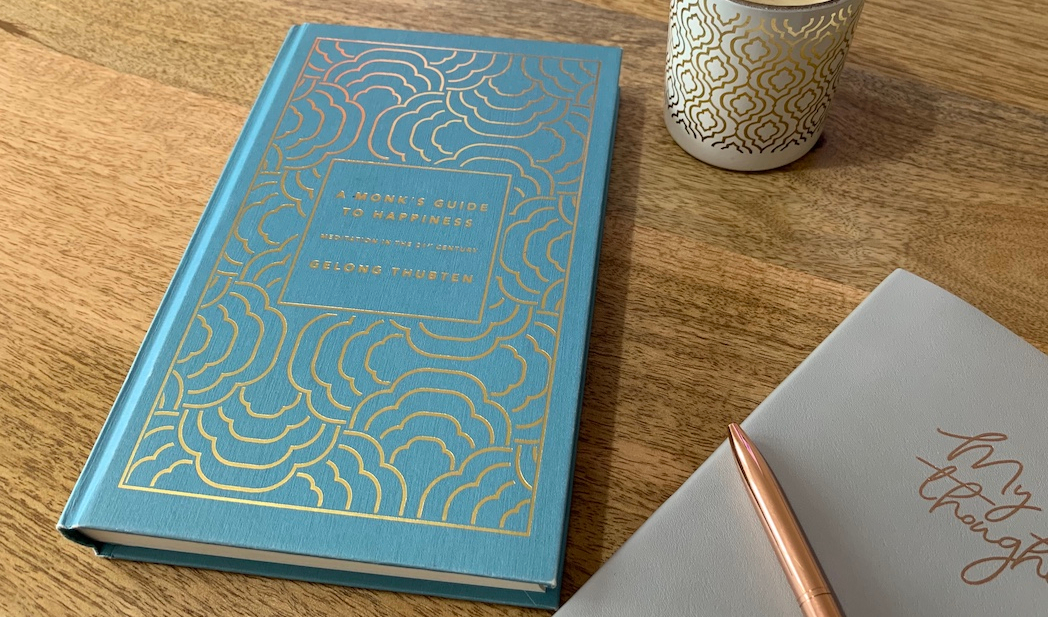
A Monk’s Guide to Happiness*…
It made me giggle to discover that when Thubten first became a monk, he actually hated to meditate; he saw it as a chore. Hearing this from someone who has been teaching meditation & mindfulness since before it was even trendy was quite a revelation. Once he realised happiness was a switch to be flicked within the mind, his relationship with meditation greatly changed. It became his life’s calling to teach this understanding to others. His life experiences – I believe – give him a better grasp on how to make meditation more acceptable and accessible to all. He advocates meditation & mindfulness in a way its never been presented to me before, gifting new understanding of its value & inspiring me to continue my practice.
I highly recommend Gelong Thubten’s Book*. Not only does it explain far more than I am able to capture here, offer clearly instructed meditations to build a strong practice upon, give valuable understanding to themes such as stress, compassion, creativity & forgiveness; it is also an absolute reassurance that happiness is available right now to us all.

RELATED: 5 Useful ways mindfulness helps in your everyday life
*This post contains affiliate links. To find out more about what this means, click here

Was this what you were expecting to hear? Or has it surprised you? What are your thoughts on happiness? Have you read A monk’s guide to happiness yet? If you have any questions or anything you’d like to say, please do get in touch by leaving a comment in the box below. I’m happy to help and I always love to hear from you!




Stop searching for Happiness! Happiness lies within ourselves. Beautifully explained..
Thank you! 🙂
Fantastic tips; thank you so very much 🙌
Glad you liked them, he’s a great teacher – thank you for reading x
I love this! Particularly the idea of meditating with eyes open. This might help me to stop falling asleep when I meditate 🙂
I was quite shocked when he said to meditate with my eyes open, especially as it was a group meditation, but it worked well for me & I actually felt more present, which I guess is the point of meditating. Let me know how you get on with it! Thank you so much for reading xx
This was such an interesting post – I completely agree that happiness really is a choice. I tried to chase happiness for so long until I finally realized that happiness is something that I need to be open to receiving and creating. While I don’t meditate, I have found benefits from journaling and writing down gratitude lists to be better attuned to the little moments of micro-happiness that occur everyday!
Thank you! That’s wonderful you use moments of mindfulness – such as gratitude & journalling – to notice happiness each day xx
I found this so fascinating to read. I feel pleased that I’m along the right lines by meditating (almost) every morning, but I think I could make it more of a habit and I’ll use your tips to make this happen. Thanks x
Thanks Gemma, he’s a fascinating guy to listen to! He talks about building discipline through consistent practice, to me, consistent means you do something more often than not, so I wouldn’t be hard on yourself if you don’t manage everyday xx
Loved this post Alex – and although I’ve got the 10 mins in the morning down to a T, I think the micro meditating throughout the day is a great idea. Didn’t realise about meditating with eyes open and I can see how having something (a wall) behind when meditating makes me more secure – and the purpose of meditating for the benefit of others too. x
Thank you! Yes, I was shocked when he said to meditate with your eyes open – if it really doesn’t work for you, he said it was OK to do it with your eyes closed, but the idea is really about awareness of the present moment, so I’ve run with it – let me know how you find it if you try it! xx
Will do 🙂
I especially like the part of this article which talks about not looking down at others from a ‘pedestal of righteousness’ as I strongly believe in ‘which one of us has the right to do this’. Also, morning meditation I feel is so important, and, as a Christian I find it very helpful, but am also learning not to feel I HAVE to do it ‘in order to have a good day’ as if I can control everything that happens. Thank you Alex, a thought provoking article.
Thank you for reading & sharing your thoughts x
Such an interesting post, and informational too! I hope I can start meditation soon and the definition of happiness sounds so true!
This was such a helpful article. I love what you said about searching for happiness. It’s a reminder that one such practice gratitude for what they already have. Thank you for writing this piece and for giving us some helpful meditation tips.
You’re very welcome! Thank you for reading and sharing your opinion, I really appreciate it x