

Mental health isn’t something I tend to write about, not because I don’t see it as valuable or something that needs to be discussed, but more because I view it seriously and haven’t felt qualified to give advice.
However, I’m a person prone to anxiety. Not a little spot of anxiety every-so-often but the type of full-blown panic attack, heart palpitation anxiety that has been known to leave me as a big sobbing heap on the floor.
This pandemic hasn’t been helpful in making us feel less anxious either has it?
A number of people have spoken with me either about their own experiences or experiences of friends and loved ones. And it made me realise that perhaps I do have something helpful to say. Absolutely not as a medical professional, but simply as someone who can relate to people who experience anxiety too. After all, we’re really not alone in our experience, even if it feels like we presently are.
I also understand that the majority of the suggestions I’m making here are already widely recognised and so for some, what I’m saying is nothing new. Although, I do believe that sometimes – especially when you’re anxious – you need to hear a message a fair few times before a spark of ‘maybe I should try that’ is ignited.
With all that being acknowledged, here are 5 things to try to help you feel less anxious…
#01 Be Kind to Yourself
I would get very cross with myself when my anxiety flared up. The frustration came because I believed I had no right to feel anxious. My life was good, all was well – I couldn’t understand the feelings of anxiety – why couldn’t I just enjoy the life I got to lead? Having anxiety made me feel like I was being ungrateful somehow. So I pushed myself to try to ignore the feelings; which is often how the emotional symptoms manifested into physical ones, such as the panic attacks I mentioned.
Recently I realised how silly this was of me. Would I say I was being ungrateful for my life if I was ill with a cold? Of course not! I would just accept I was unwell and do what I needed to feel better again. Which is how I approach my anxiety now – doing what I need to feel better again.
Most importantly that means being kind to myself, having patience and showing care rather than spending time reprimanding myself for something I can’t control. I advocate this as something we should all try, extending a loving-kindness to yourself, being responsive, not dismissive of your needs.
I’ve previously written advice on how to practice self-care without feeling selfish and also how to get the most out of any self-care you undertake, which I highly recommend you read to help kick start that kinder self-behaviour.
#02 Exercise
Back in March, I attended a talk given by Dame Kelly Holmes about exercise and its positive impact on mental health. It’s widely recognised that physical activity can help reduce anxiety and depressive symptoms. Personally, I have to agree with this. As I shared in: Why I Run – My Running Story, exercise gave me back my identity and some much-needed me-time. It helped me feel better even when times were tough.
It doesn’t have to be running, any form of exercise that increases your movement and gets those endorphins pumping can help. Work out what ‘work out’ is for you and commit to it. Even a daily short walk in some fresh air has the potential to really help.
Here’s some further reading you may find helpful:
#03 Mindfulness
Anxiety is overwhelming isn’t it! What brings me down in the midst of a panic attack or slows my heart rate once it’s racing is being still and taking deep, controlled breaths. Admittedly it’s easier said than done but what I’ve found is that finding space daily, even just for 10 minutes, to be still and focus on my breathing often helps to stop me from getting to a place where I need to do this reactively.
Mindfulness is all about gaining headspace. This is the meditative part of mindfulness, however, you can take multiple mindful moments throughout each day. It’s about fully absorbing yourself for a few moments in the present moment, not ruminating on the past or worrying about the future, just grounding yourself in the now.
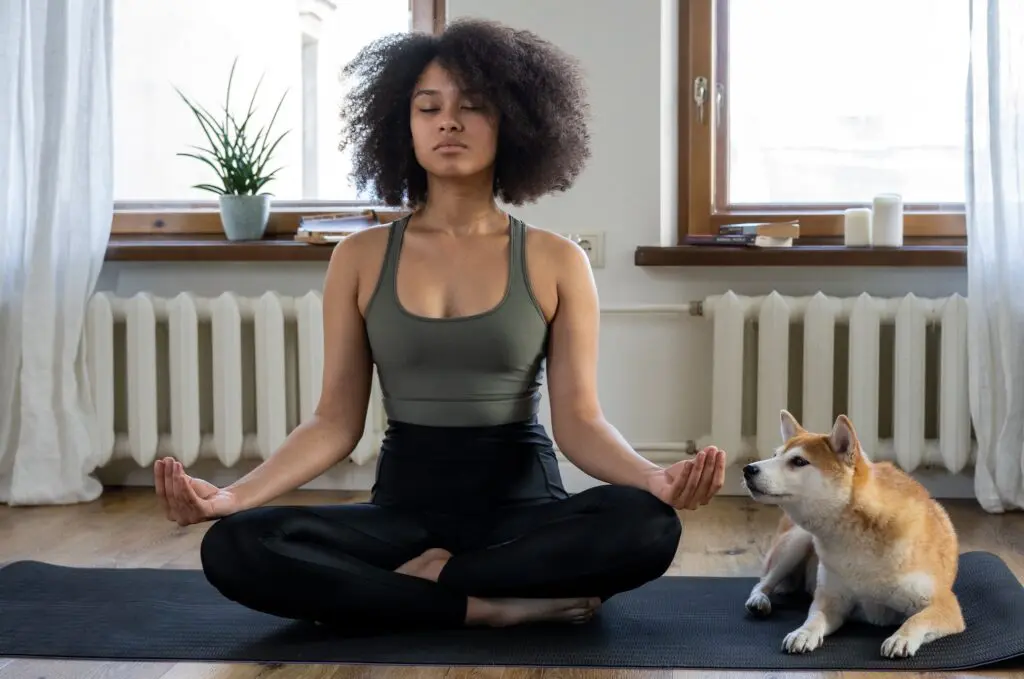
Personally, practicing mindfulness has allowed me to change my relationship with anxiety – it doesn’t eradicate it, more lessens it’s hold on me. I have a different perception of it now.
You can learn mindfulness via various Apps (I recommend Headspace), through in-person courses (although they might be more virtual at the moment) and also through a wealth of online resources. Learn more about mindfulness here.
Top Tip: There are some great anxiety-reducing mindful activities you can try, such as mindful colouring, most craft activities, cooking and even things like completing jigsaw puzzles. They are brilliant at grounding you in the present moment.
Good to know: Research has found that mindfulness increases density of grey matter in areas of the brain related to memory, regulation of emotions, empathy and learning This is not instant, you need to give it time and continued practice.
#04 Write It Down
My anxiety tends to latch onto thoughts and build them up to be more catastrophic and overwhelming than they really need to be.
This is where processing and releasing those built-up anxious thoughts could help. You could use the free downloadable worksheet I’ve created which helps you to work through these anxieties – I find this calms me when I’m catastrophising.
Another idea is just to write your worries down. For example, one night I was struggling to sleep with something playing on my mind and so I drafted out a note about it all. I didn’t overthink or edit what I was writing, I just allowed it to all flow out. When I was done, although it didn’t alter the situation, it helped to release some of the tension.
It’s up to you whether you delete or throw away what you’ve written without revisiting it. There’s no right or wrong, just what feels right to you. However, I have been advised in the past to revisit my writing when I’m not in such an anxious space. Doing this may help to process the situation better, maybe identifying things to work on or potential solutions.

#05 Talk
My kids have a picture book called ‘The Huge Bag of Worries’ – it’s about a child who walks around with a bag full of worries, and the bag gets heavier and heavier and harder to carry. Spoiler alert, but the child is told to take each worry out of the bag and talk about them with someone. Some of the worries get smaller, some are worries which others can take away from them and some just disappear into the air the moment it’s shared. Ultimately through talking, the bag gets lighter.
Talking helps us to feel connected and supported. You can talk to one person or lots of people, just make sure they’re someone with your best interests at heart.
People aren’t mind readers, they often do need to be told how you’re feeling and what you need. Even if that need is not to mention anxiety for a while and be allowed some time just to have fun with them. So be open to sharing and talking things through.
Want all the latest Living.Pretty.Happy well-being news delivered directly to your inbox?
Seeking Professional Support to feel less anxious
I haven’t included this as something you should ‘try’ as I feel this is something you should do. If you’re questioning your ability to cope with the anxiety you’re experiencing, if you’re experiencing it at a more noticeable level, if things that usually help aren’t helping, or if you’re concerned; absolutely make that call to gain professional support.
Plus, as I’ve discovered in the past, sometimes heightened anxiety can be a symptom of an underlying health issue – did you know anaemia can contribute to feelings of anxiety? It’s worth reaching out as your GP can give you a thorough health check.
There are also a growing number of regional well-being services offering additional support as you manage your anxiety, contact one in your local area to see what they can provide. Search: NHS Well-being Services for further details.
Additionally, there is lots of support and information on the NHS Mental Health & Well-Being page
Everything I’ve suggested here I’ve personally tried.
If you do decide to try any of them, I highly urge you to give these suggestions a fair trial. Good things take time and unfortunately, there is no instant fix – this really is a process. You may also find (as I do) you need to incorporate a combination of the suggestions into your lifestyle to really experience the balance you want. Take the time to discover what works best for you.
Please remember I’m not a mental health professional, these are just my own personal experiences in feeling less anxious. Please do seek professional help and support for your mental health concerns. And whatever you’re going through organisations, such as The Samaritans are there to help 24-hours 365-days a year – they have a free phone service on 116 123. For my international readers, here is a list of crisis lines by country.
RELATED: HOW EMDR Therapy Helped Me Develop As A Person
Have you tried any of these suggestion? What do you find helps you to feel less anxious? Have you found the pandemic has raised your anxiety levels or have you managed to feel more grounded at this time? Whatever you’d like to say, or ask, please do. I’m happy to help and I always love to hear from you, just leave me a comment in the box below.
ADVERTISEMENT:


This is so useful, especially in the current context. I’m aware that many people are feeling more anxious than they did pre-COVID, and it helps to tackle it ‘early’ before it becomes overwhelming. Thank you.
I’m so pleased you feel it’s useful and yes, I agree it’s definitely better to address it earlier before it becomes overwhelming. Thank you so much for reading and sharing your thoughts xx
These were great tips Alex, I have tried them myself and I do know they can be helpful.
Thank you Lusine, that’s good to hear – thanks for sharing your thoughts, I really appreciate it xx
I think both mindfulness and blogging has helped reduce any anxiety, certainly while I was having treatment – it was like my therapy in a way. It’s great to find different methods of coping with what life throws at you – and even mix them up a bit depending on the situation. Thanks for another great article! xx
Yes absolutely! You do need to mix the strategies up a bit that’s a great point you make. Thank you for sharing & your kind comments xx
Always a pleasure Alex x
During this pandemic, I have had to take several “stress walks” to keep my head under control. Exercise has been my therapy for as long as I can remember. I don’t have too many anxiety issues, but when I do, I have a friend who also has anxiety and panic attacks and we are each others go-to people to talk us down. Great post, Alex! xo
That’s great that you have someone who helps and you help in return and I completely agree with you on the exercise! Thanks for reading & sharing xx